

Digital transformation and decarbonization are raising performance demands on advanced materials. Sumitomo Metal Mining categorizes its advanced materials into five functional properties: Thermal, Solar, Electrical, Magnetic, and Chemical.
Start with the property your application requires, then see which materials deliver it and how manufacturers and research institutions have put them to work.


 Thermal Properties
As devices shrink, they remain stable thanks to materials that conduct, dissipate, and resist heat, and that sinter at lower temperatures.
Thermal Conductivity
Spreads heat quickly to prevent localized overheating.
Heat Resistance
Stable operation in high-temperature environments.
Low-Temperature Sintering
Bonds particles with less energy and less thermal load.
Electronic components, semiconductors above all, are sensitive to heat, therefore the risk of malfunction climbs once they exceed a threshold temperature.
As devices shrink, gain more functions, and integrate with surrounding systems, thermal management has become a design constraint rather than an afterthought. Materials with high thermal conductivity move heat quickly through a device, preventing localized hot spots and keeping performance stable under changing loads.
Low-temperature sintering addresses the same constraint from the process side. Forming bonds at lower temperatures reduces the thermal load on surrounding components, widening the range of materials a designer can employ and improving reliability, while also cutting energy use and CO₂ emissions.
Our materials cover high thermal conductivity, heat dissipation, heat resistance, and low-temperature sinterability, properties that support efficient thermal management and reliable performance in high-temperature operating environments.
Related Materials
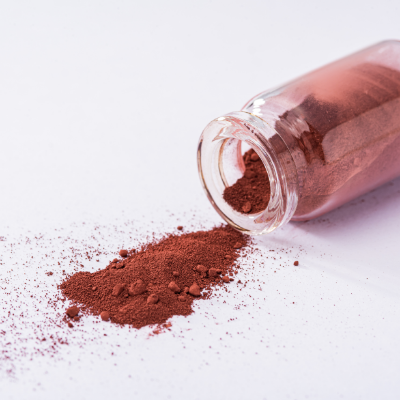
Nano Copper Powder
Our nano copper powder combines uniform particle size with the ability to sinter in air at temperatures as low as 160°C.
Explore Nano Copper Powder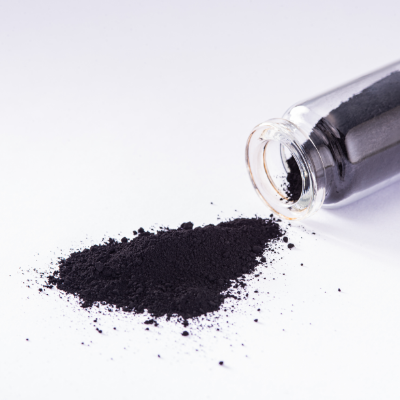
Ultra-fine Nickel Powder (R&D)
Produced by a proprietary wet chemical process, this ultrafine nickel powder has a particle size below 0.1 µm, excellent dispersibility, and very low impurity levels, making it well suited to electronic components.
Explore Ultrafine Nickel Powder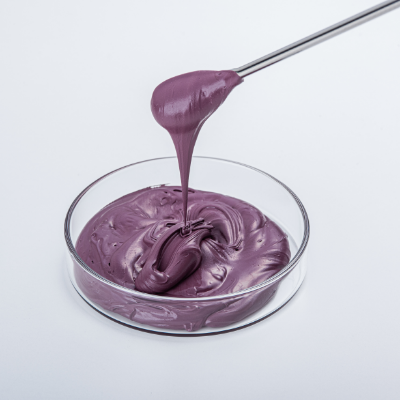
Thick-Film Pastes
Combining high conductivity, uniform dispersion, and strong adhesion, our thick film paste technology lets ustailor materials to each customer's requirements.
Explore Thick-Film PastesResources
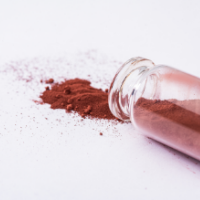
Low Temperature Sintering to Form Copper Electrodes
See Sintering Case Study
What Is Sintering? The Technology Behind Low-Temperature Mounting
Read Sintering Article
 Solar Properties
Materials that absorb near-infrared light while transmitting visible light can convert that energy into heat—warming fabrics or blocking solar gain in buildings and greenhouses.
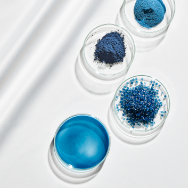
Near-Infrared Absorption
Absorbs near-infrared light selectively.
Transparency
High transparency that preserves pigment color.
Photothermal Conversion
Converts absorbed near-infrared light into heat.
Sunlight contains near-infrared as well as visible light. Our near-infrared-absorbing materials absorb specific wavelengths efficiently and convert them to heat while remaining transparent to visible light. Fabric made with these materials warms the wearer as soon as sunlight reaches it. In window glazing and agricultural netting, the same property works in reverse: the material blocks near-infrared before it enters, so a room or a crop receives the visible light it needs while unwanted heat stays out, keeping building and vehicle interiors comfortable and reducing the energy required for cooling. These materials can also be used to weld transparent resins.
Related Materials
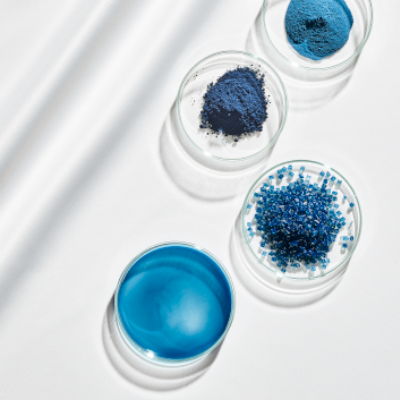
Near-infrared Absorbing Materials
Our proprietary inorganic material offers high visible-light transmittance, strong near-infrared absorption,and excellent weather resistance.
Explore Near-Infrared-Absorbing MaterialsResources

What are Near-Infrared Absorbing Materials?
Read Near-Infrared Materials Article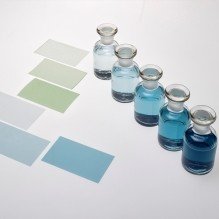
What is Near-Infrared-Absorbing Material for Heat Control?
Read Heat-Shielding Windows Article
Heating White & Translucent Objects with Sunlight
See Light-to-Heat Case Study

Preventing Excessive Temperatures in Greenhouses
See Greenhouse Case Study
Windows That Block Heat While Allowing DayLight
See Window Materials Case Study
 Electrical Properties
Materials that conduct current, insulate reliably, and hold their performance at high frequencies underpin faster, denser electronics.
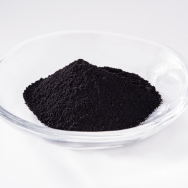
Conductivity
Carries current efficiently with minimal loss.
Insulation
Delivers high insulation reliability on circuit boards.
High-Frequency Characteristic
Reduces transmission loss in high-frequency signals.
As electronic devices become smaller and more sophisticated, efficient electrical conduction is critical to stable operation. Conductivity is not the only concern: resistors and substrates also rely on adequate insulation properties, and the shift toward high-capacity, high-speed data communication has created demand for materials with low loss at high frequencies.
Driven in part by the rapid spread of IoT, 5G networks have been scaled to enable ultra-high-speed, high-capacity communication. Because 5G operates at millimeter-wave frequencies, it requires insulation materials with low dielectric loss. Dielectric loss is the energy dissipated as heat when an alternating electric field is applied across a dielectric, and it degrades signal quality.
Related Materials
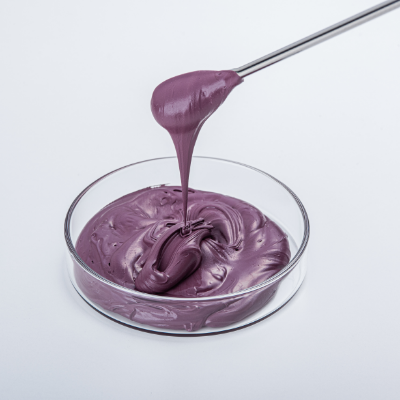
Thick Film Pastes
Combining high conductivity, uniform dispersion, and strong adhesion, our thick film paste technology lets us tailor materials to each customer's requirements.
Explore Thick-Film Pastes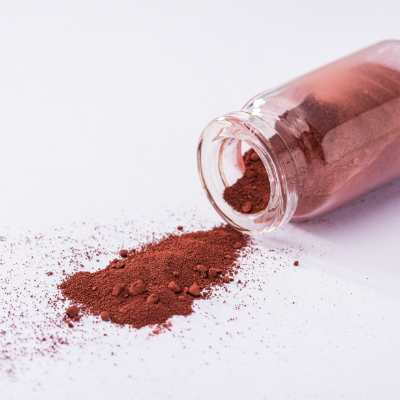
Nano Copper Powder
Our Nano Copper Powder is made through a proprietary wet chemical process. This gives it a more uniform particle size distribution than standard atomized copper powder.
Explore Nano Copper Powder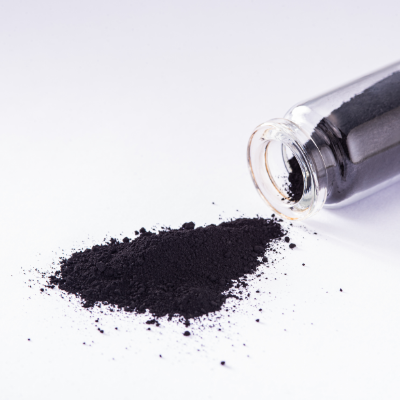
Ultra-fine Nickel Powders (R&D)
Produced by a proprietary wet process, this ultrafine nickel powder has a particle size below 0.1 µm, excellent dispersibility, and very low impurity levels, making it well suited to electronic components.
Explore Ultrafine Nickel Powder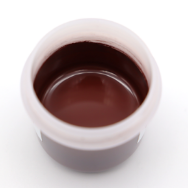
MOD Paste (R&D)
A next-generation wiring material for thick-film printing, with improved oxidation resistance that drives innovative mounting technology.
Explore Metal Organic (MOD) Paste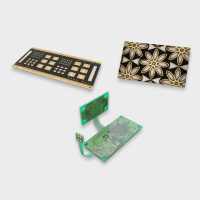
High-Density Printed Circuit Boards
High-density printed circuit boards enable miniaturization, high-density mounting, and greater design flexibility with cavity structures, micro holes, narrow slots, and thin-board blasting.
Explore High-Density Printed Circuit BoardsResources


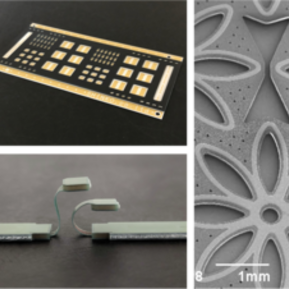
 Magnetism
Materials that generate, retain, and respond to magnetic fields enable efficient energy conversion, precise actuation, and sensitive detection.
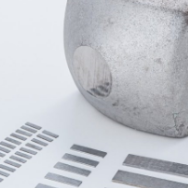
Magnetic Strength
Strong magnetism for efficient energy conversion.
Magnetic Properties
High performance with excellent magnetic properties.
Magnetostriction
Uses magnetically induced shape changeto generate power.
Magnetic energy, the energy an object holds within a magnetic field, is put to work in electric motors, generators and magnetic recording devices. Using it effectively calls for materials with excellent magnetic properties. Magnetic materials, whether permanent magnets or electromagnets, generate and retain magnetic fields, enabling efficient energy conversion in motors, speakers and magnetic sensors. Rare-earth magnets stand out for their magnetic strength and durability, improving device performance while allowing motors and generators to be made smaller and to consume less energy.
Magnetostrictive materials change shape in response to a magnetic field. That behavior, called the magnetostrictive effect, is applied in actuators, sensors and ultrasonic devices for precise positional control and highly sensitive detection. It is also the basis of vibration energy harvesting.
Related Materials
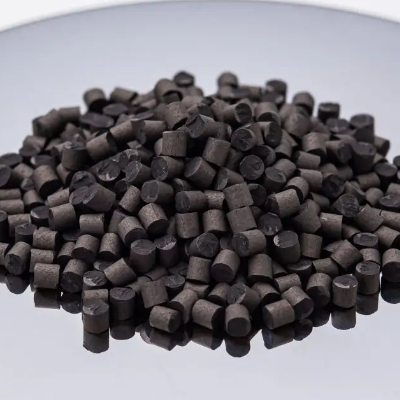
Magnetic Materials
Our Wellmax™ series delivers high-performance samarium-iron-nitrogen (SmFeN) magnets made from surplus samarium (Sm).
Explore Magnetic Materials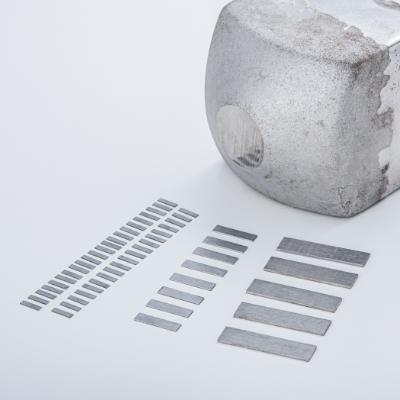
Iron-Gallium alloy (R&D)
Iron–gallium alloy (Galfenol) is used for vibration energy harvesting in IoT applications, and high-quality single crystals can be grown by the Bridgman method.
Explore Iron-Gallium alloy (Galfenol)
How Galfenol Single Crystals Enable Vibration Energy Harvesting
Read Galfenol Development Story
How Galfenol Single Crystals Enable Self-Powered Sensing Devices
Read Galfenol Development Story
 Chemical Properties
Materials that disperse uniformly and resist harsh chemistry support finer processing and reliable performance at lower loadings.
Dispersion
Uniform dispersion that maximizes material performance.
Microfabrication
Precision processing for durability and adhesion across a wider range of applications.
Chemical Resistance
Holds performance in harsh conditions, including high-temperature alkaline solutions.
Dispersion uses chemical energy to control how particles interact, producing a uniform particle distribution. For powder materials, this technology sits at the core of every function, extending what the material can do. Our powder materials achieve a sharp particle size distribution through this same dispersion technology.
Our proprietary particle technology also delivers high catalytic activity, raising reaction efficiency even at low temperatures and supporting decarbonization technologies such as methanation. Microfabrication further improves adhesion and flex resistance.
Related Materials
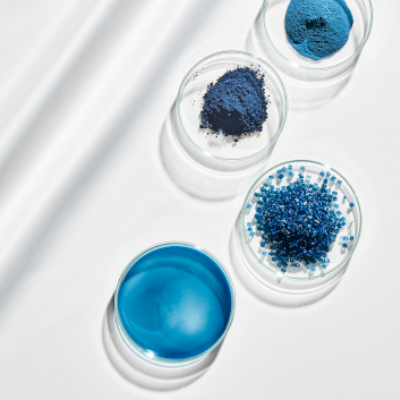
Near-infrared Absorbing Materials
Our proprietary inorganic material offers high visible-light transmittance, strong near-infrared absorption,and excellent weather resistance.
Explore Near-Infrared-Absorbing Materials
MOD Paste (R&D)
A next-generation wiring material for thick-film printing, Metal Organic (MOD) Paste delivers improved oxidation resistance that supports innovative mounting technology.
Explore MOD Paste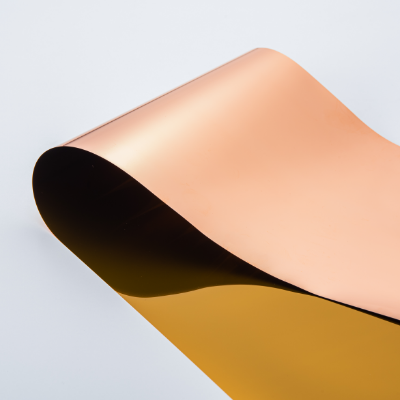
Copper Clad Laminate
Thin, flexible laminates with smooth interfaces and uniform copper layers for fine-pitch circuitry, including a transparent FCCL for antenna applications.
Explore Copper-Clad Laminate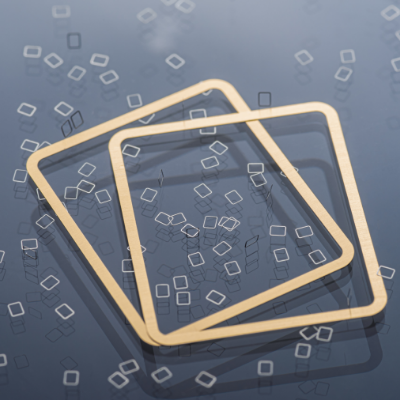
AuSn (Gold-Tin) Solder
High-purity gold-tin (AuSn) solder offers excellent wettability, making it well suitedto ultra-fine-pitchassembly and high-reliability electronics.
Explore AuSn SolderResources