Metal Organic Decomposition Paste (CuALL™-Paste) 【R&D】

閉じる
閉じる
Search
Flexible displays, wearables, and anti-fog heating elements all require circuits printed on surfaces that conventional processes cannot accommodate. Conductive ink is what makes that possible. This article covers what conductive ink, its usage, and why cost remains its main obstacle. It also introduces Sumitomo Metal Mining's Metal Organic Decomposition (MOD) Paste, which sinters at low temperatures and delivers high conductivity for printed electronics.
Conductive ink is a printable liquid formed by dispersing a conductive filler in a vehicle. It is used in the circuits and sensors of electronic devices, and prints well on both rigid substrates, such as alumina, and flexible ones, such as heat-resistant PET and polyimide films, giving engineers far more flexibility in designing and producing electronic devices.
As the expansion of the Internet of Things (IoT) drives demand for conductivity across more applications, conductive ink, which can now be printed on a wide range of materials, broadens the possibilities in designing and manufacturing electronic devices.
Fillers are what differentiate conductive inks. Some combine micro-particle metal fillers such as gold, silver, or copper with a binder, some use metal nanoparticles or submicron particles as the filler, and others rely on carbon-based fillers such as carbon and graphene. Inks built from silver micro-particles and a curable resin such as epoxy have seen the widest use, and their high viscosity is why they are also called silver pastes. Resin-cured pastes can form circuits at low temperatures, but their resistance is higher than that of pure metals. The metal particles contact one another only through the binder, which limits the contact area, and the binder itself adds resistance.
In inks that use metal nanoparticles or submicron particles as the filler, the particles sinter directly to one another at low temperatures. As a result, the conductor achieves a greater metal-to-metal contact area than a resin-cured paste. Depending on the degree of sintering, the conductor can approach the properties of bulk metal foil. Gold and silver nanoparticle inks have seen active development in recent years as stable electronic materials that offer high conductivity, resist oxidation, and do not require high-temperature processing.
Conductive inks appear across a wide range of products, from consumer electronics such as touch panels, flexible displays, wearables, and electronic paper to automotive components such as sensors and anti-fog heaters, as well as industrial equipment such as sensors and batteries. They enable device geometries and form factors that conventional manufacturing could not produce. As IoT usage expands, demand for conductive inks is expected to grow further.
What is Printed Electronics? Exploring its Applications, Practical Examples, and Future Potential
Cost is one of the main challenges for conductive ink, especially silver-based ink, as silver prices continue to rise. This has led to active research into copper- and carbon-based alternatives. However, properly matching the electrical performance of silver has its own difficulties. Copper, for example, is more prone to oxidation than silver, which compromises ink stability and requires targeted countermeasures.
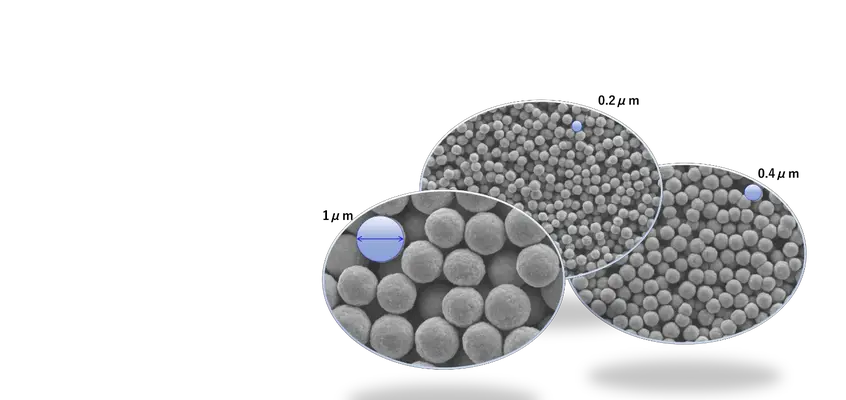
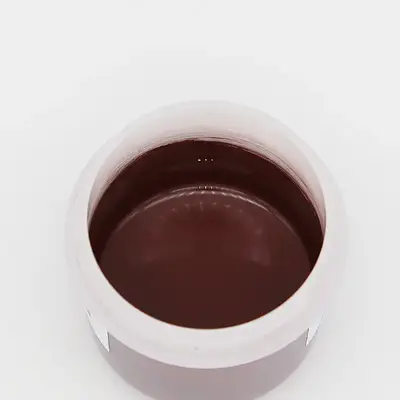
Sumitomo Metal Mining is developing a new conductive material, MOD Paste. It pairs an easy-to-handle MOD ink with the company's own oxidation-resistant nano copper powder, which lets the paste sinter at low temperatures and reduces electrical resistance through thick-film application. The MOD ink on its own also works as a conductive ink.
Compared with conventional copper nanoparticle inks, the new material offers better oxidation resistance and high conductivity at lower cost, making it well suited to large-area devices, where a significant volume of ink is required.
Metal Organic Decomposition (MOD) Paste
With its low-temperature sintering and thick-film capability, Sumitomo Metal Mining's MOD Paste broadens what printed electronics capabilities. It points toward new applications and toward materials that will support the next generation of the electronics industry, including batteries and displays.
X-Mining combines profound expertise in materials science with industry insights to innovate and solve challenges. If you see potential for collaboration, please contact us with any questions.
Introducing Sumitomo Metal Mining’s material products,
which are the starting point for X-MINING innovation.