Article

閉じる
閉じる
Search

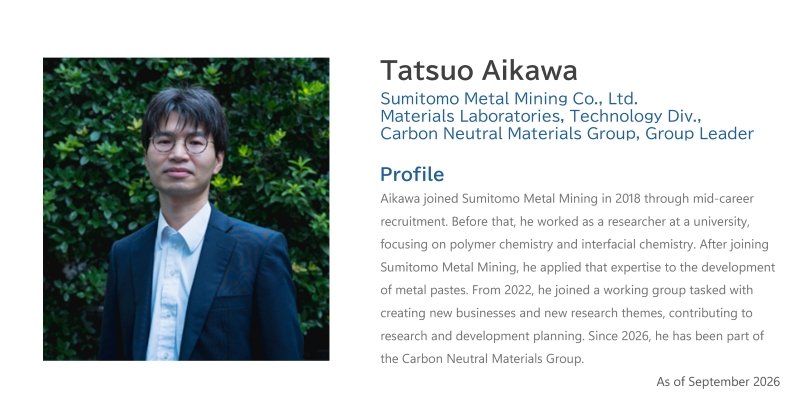
Shaping Co-Creation for Carbon Neutrality Through Ultrafine Nickel Catalysts Converting CO2 into a resource and linking it to solutions for social challenges, is the goal Tatsuo Aikawa, Leader of the Carbon Neutral Materials Group at Sumitomo Metal Mining, pursuing through the development of ultrafine nickel catalysts. Nickel is expected to play an important role as a base-metal catalyst material, offering an excellent balance of performance and affordability in areas such as methanation. But its potential cannot be fully realized within the laboratory alone. Only by working closely with partner companies, research institutions, and ultimately the users themselves can we uncover new possibilities through trial and error. In this interview, Aikawa talks about what first drew him to research the carbon-neutral materials he is now developing, and his thoughts on co-creation.
Aikawa: My fascination with natural phenomena, which began when I was a child, was the starting point of my path as a researcher. I enjoyed wondering things like, “Why does this phenomenon occur?” or “Why is it this color?” The desire to have a deeper understanding of the underlying reasons for various phenomena led me toward science and engineering.
One thing I was especially interested in from an early age was adhesives. Different adhesives are used for paper to paper, or metal to metal, and I used to wonder why the same bonding process required different materials. In my previous position, I studied polymer chemistry and interfacial chemistry at a university, where I worked on bio adhesive materials that bond cells or bones together. Looking back, I think the curiosity I had as a child may have led me directly to the research field I chose later in life.
Aikawa: The opportunity came through a joint research project between my former university and Sumitomo Metal Mining. I was involved in research on uniformly dispersing SOLAMENT™, a near-infrared absorbing material developed by Sumitomo Metal Mining, into resin.
Through that collaboration, I received an offer and decided to join the company because I felt the knowledge I had built in polymer chemistry and interfacial chemistry could also be applied in a new field.
I have always been the type of person who is interested in things no one has done yet. Of course, while improving existing technologies is essential, combining knowledge from different fields to create new materials is also important. In that sense, Sumitomo Metal Mining’s technical scope was very different from the areas I had worked in before, and I was strongly drawn to the possibilities of cross-disciplinary collaboration.
Aikawa: The biggest difference I felt was the way research outcomes are valued. In university research, value comes from publishing results in papers and at conferences and making them widely known to other researchers. In a company, on the other hand, the first step is to secure the results as intellectual property and then convert them to real-world implementation. At first, that difference in process was quite surprising.
What I gained from that experience was the idea that technology creates value only when it is used. Technologies have no value in society if never put to practical use, no matter how excellent they might be. Once you work in research at a company, you realize how important it is to keep in mind who the technology can help and what problems it can solve.
Aikawa: I am working on materials development related to carbon neutrality. Specifically, I am developing an ultrafine nickel catalyst for methanation, a process that synthesizes methane, the main component of town gas, from CO2. It is a catalyst material that uses ultrafine nickel powder developed by Sumitomo Metal Mining to turn CO2 from a mere emission into a resource.
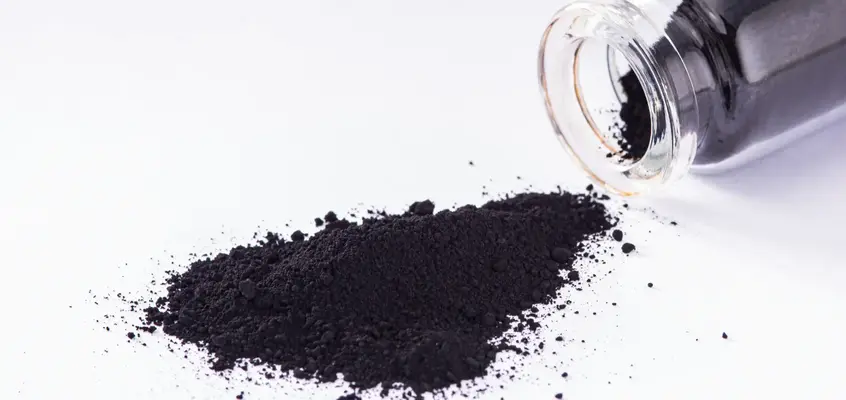
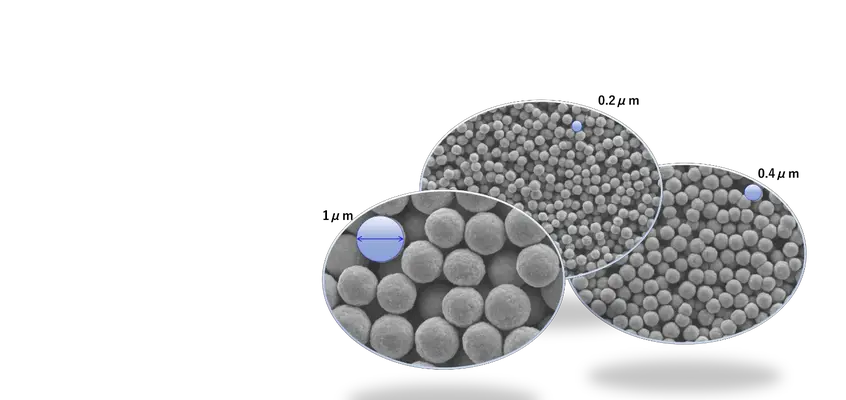
Ultrafine nickel powder was originally developed as a material for electronic components. It has low impurity levels, a sharp particle size distribution, and properties that make it easy to use in catalyst design.
By combining this ultrafine nickel with other materials, we can create a catalyst for methanation, also known as the Sabatier reaction, that shows high activity at low temperatures. In addition, if the catalyst powder is dispersed in a liquid to form a slurry, it can be impregnated into porous supports and other structures. This gives us greater flexibility in designing the reaction process according to the operating environment.
From the beginning, I felt that materials such as nickel, copper, and cobalt, materials in which Sumitomo Metal Mining has strong expertise, could have great potential as catalysts, and that belief has led me to my current research. Naturally, the goal is to build a viable business, but I continue to advance research keeping in mind how it can contribute to society.
Aikawa: Ultrafine nickel catalysts are still new material, and full-scale research has just begun. To move from here toward commercialization, it is essential not to present this technology as already completed, but rather as a joint development by having a variety of companies and research institutions make practical use of it.
Regardless of how good a material is believed to be by researchers, it cannot be known for sure if it is truly useful unless it is put to practical use. Methanation, particularly, is still not a widely adopted technology. Therefore, we do not want to simply deliver a finished product, but instead we want to engage with everyone who is facing carbon-neutrality-related challenges and receive feedback to improve the material step by step while creating new value together.
Aikawa: Above all, I want to contribute to carbon neutrality through the power of the materials Sumitomo Metal Mining has developed. Our company has a wide range of materials other than ultrafine nickel catalysts. Our goal is to combine them to provide society with new technologies that facilitate the reduction of CO2 emissions.
In the future, I would also like to work on materials development that makes use of biological and enzymatic mechanisms. Plants naturally use CO2 to create matter. If we could apply that mechanism to materials development, it might create entirely new possibilities. I would like to keep challenging those unexplored areas as well.
Aikawa: We have many materials and technologies that can contribute to carbon neutrality. We want to engage with companies and institutions in need of those technologies to continue developing them while resolving challenges together.
We believe that each step in that process will lead to the creation of New Value and, ultimately, to the realization of carbon neutrality. We would be very pleased if this interview becomes a chance for new connections and co-creation.
For more details on methanation introduced in this discussion, please see below:
Methanation for a Sustainable Future: New Potential of Nickel to Support Commercialization
「X-MINING is a new co-creation initiative that aims to create future-focused innovations by “crossing” your ideas with our materials to “mine” new value that impacts society.
Sumitomo Metal Mining is one of Japan’s leading resource and smelting companies. We have unique technology and materials expertise. It is no longer enough to keep these resources to ourselves. To make the most of them and achieve innovation, we must collaborate with partners. This is the vision of X-MINING.
On This Website, we introduce a wide range of functions, technologies, and solution examples of our materials. We aim to combine our products with your ideas to create new value that impacts society.
Ready to get started? Contact us to talk about your requirements.
Introducing Sumitomo Metal Mining’s material products,
which are the starting point for X-MINING innovation.