Fe-Ga Alloy Single Crystal 【R&D】


閉じる
閉じる
Search

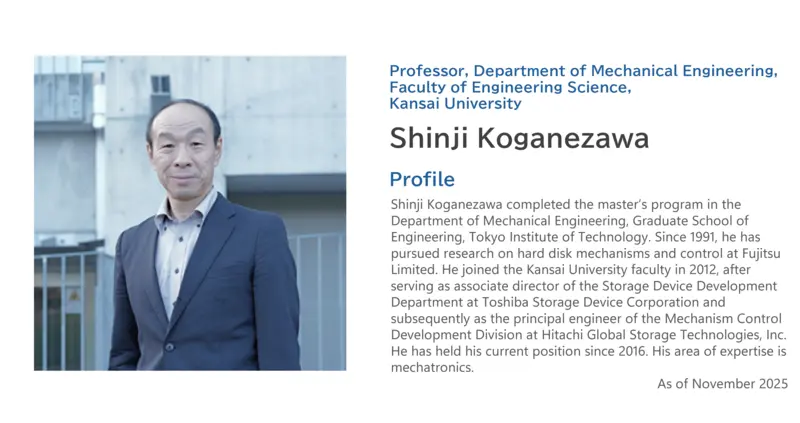
Vibration power generation devices, which can generate electricity from minute vibrations, have potential applications across a wide range of fields. These applications include detecting hazards in aging infrastructure and plant equipment. At Kansai University, work is underway to apply this technology to develop self-powered sensing devices capable of detecting bridge deterioration at an early stage. Sumitomo Metal Mining supports the research activities of Professor Shinji Koganezawa of the Department of Mechanical Engineering, Faculty of Engineering Science, Kansai University by providing iron-gallium magnetostrictive alloy single crystals, a proprietary material developed by the company. In this X-TALK, researchers from Sumitomo Metal Mining talk with Professor Koganezawa about initiatives to address social issues through industry-academia collaboration.
――Professor Koganezawa, can you tell us what inspired you to embark on your research on self-powered sensing devices?
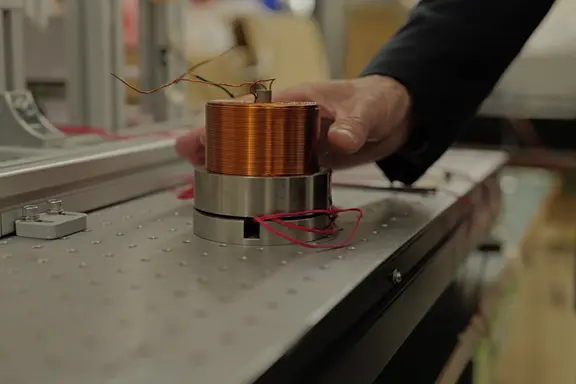
Koganezawa: We are developing sensors that harvest energy from traffic-induced vibrations and use that energy to detect early signs of bridge deterioration. These devices use iron-gallium magnetostrictive alloy single crystals manufactured by Sumitomo Metal Mining as the component that converts these vibrations into electrical signals.
Before I joined Kansai University, I worked for a private company, where I was involved in research and development on sensors and actuators. As part of that work, I was also doing research on vibration power generation. I continued my research on vibration power generation after taking a position at the university. Around 2019, a road maintenance company approached us, believing that vibration power generation could be used to assess the structural integrity of bridges. That’s when my research and development started, and it continues to this day. Another key factor was that the service-life issue of transportation infrastructure such as highways and bridges was emerging as a major public concern at the time.
* In the 2010s, most of the transportation infrastructure built during Japan’s period of rapid economic growth began to exceed 50 years of service. The collapse of the ceiling panels in the Sasago Tunnel on the Chuo Expressway in December 2012 served as a galvanizing incident that underscored the problem of aging infrastructure as a social issue. In 2013, the Road Act was amended to mandate close-up visual inspections of all bridges and tunnels once every five years. However, in recent years, the maintenance and management of transportation infrastructure has run up against the challenges of a shortfall in maintenance funding and engineers.
Izumi: Especially notable is that Sumitomo Metal Mining began developing iron-gallium magnetostrictive alloy single crystals around the same time Professor Koganezawa began his research on vibration power generation. Sumitomo Metal Mining launched the project for developing iron-gallium magnetostrictive alloy single crystals in 2017. I joined the project in 2018, and we began our efforts to grow larger iron-gallium single crystals in 2020. I feel there’s a meaningful connection in the fact that both of us began focusing on the potential of iron-gallium almost at the same time. Subsequently, our Planning & Administration Department became aware of Professor Koganezawa’s research, and we met for the first time in March 2021. We were still in the middle of the COVID-19 pandemic at the time, so our initial meeting took place online.
Koganezawa: Before I met Mr. Izumi, I purchased, through a trading company, a magnetostrictive material called Terfenol-D for use in devices. But the material would often crack upon being subjected to strong vibrations, and it was pricey, at 20,000 yen a piece. Furthermore, customizing the material to the dimensions required for my experiment would have cost several million yen, so I had no choice but to stop using it.
When large trailer trucks pass over a bridge, the vibrations can result in extremely high pressures, which can reach well over 100 MPa. These pressures can cause ordinary metals to fracture, but I simply wouldn’t have the development funding needed if the material fractured every time it was subjected to a large load. I got a call from Sumitomo Metal Mining at that point, when I was looking for a material that offers both high durability and lower cost.
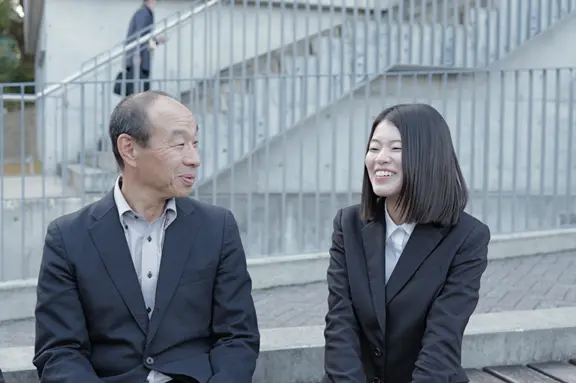
Takahashi: Where exactly on the bridge are the sensing devices installed?
Koganezawa: Bridges have components called bearings located between the roadway and the bridge piers. The sensors are installed near the bearings.
Izumi: I had the opportunity to actually see a bridge with the sensors installed. I saw firsthand the incredible forces applied to the bearings. Taking that into consideration, we’ve also done numerous experiments to improve the durability of iron-gallium magnetostrictive alloy single crystals used in the sensing devices.
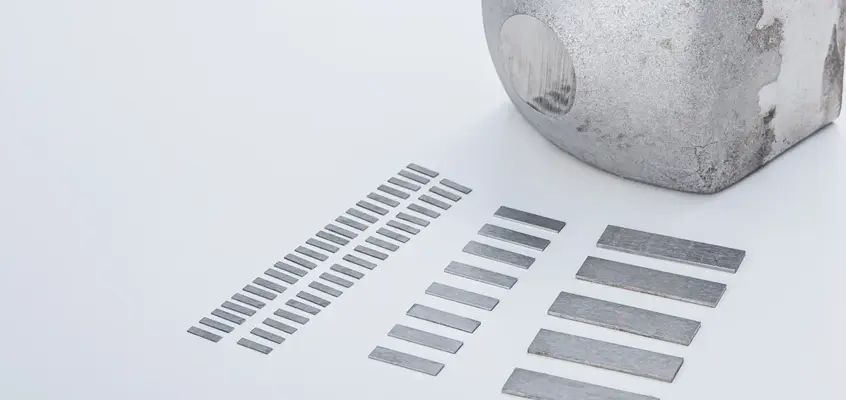
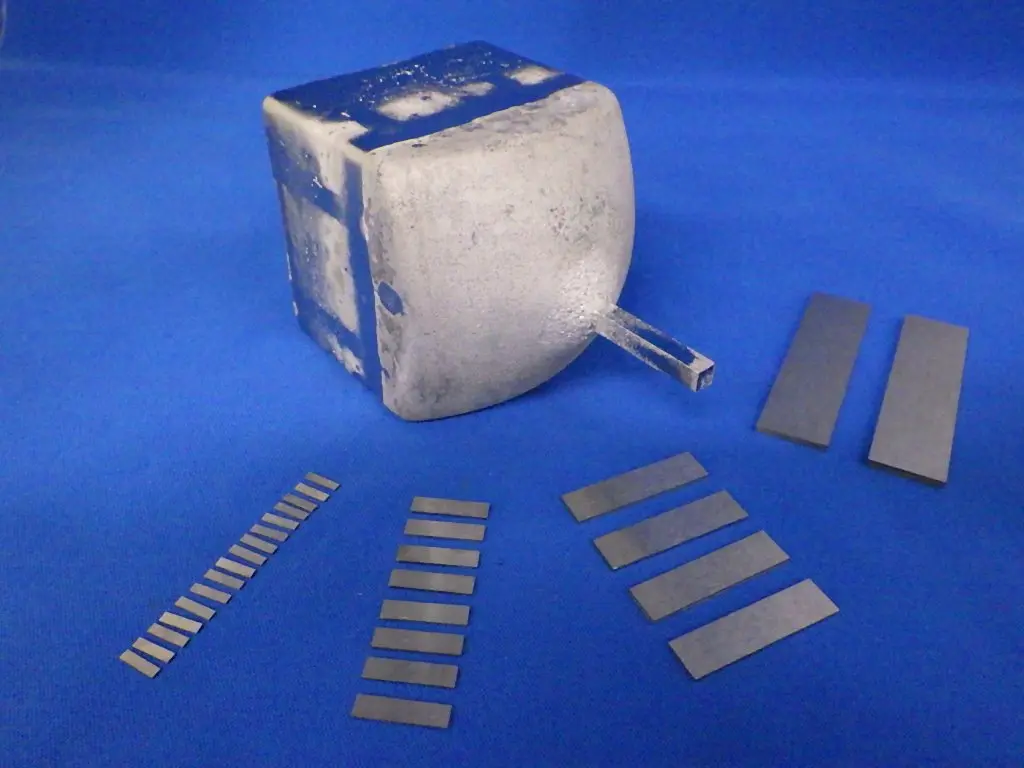
Takahashi: The high strength resulting from their single-crystal structure is the greatest advantage of iron-gallium magnetostrictive alloy single crystals. In the case of polycrystalline alloys, which are formed from a mixture of multiple crystals, the alloys can crack starting at the boundaries between crystals. In single crystals, such points of crack initiation don’t arise, allowing them to withstand strong pressures. Still, the larger the single crystals, the greater the challenge of growing them. Controlling the temperature is crucial during the process of growing single crystals as a temperature difference tends to develop between the interior and exterior of larger crystals. I’m continuing my research on how to produce stronger and larger crystals.
Izumi: Professor Koganezawa has also requested materials with larger dimensions, which had been hard to grow. Although we’d originally developed single crystals in plate form, Professor Koganezawa needed them to be in cylindrical shapes, so we needed to develop the related processing technologies. Thanks to breakthroughs in recent research, we’re now able to supply larger, higher-performance, cylindrical single crystals more quickly.
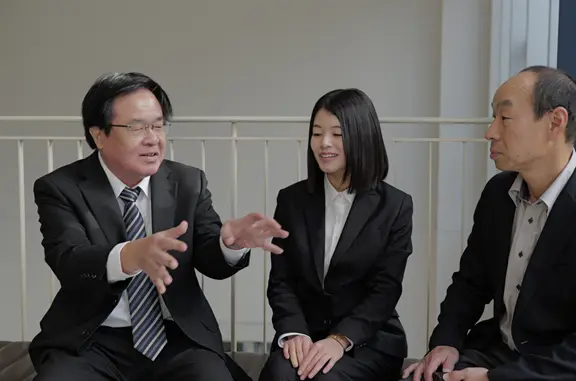
Koganezawa: So, you’re machining single crystals in rectangular prism shapes into cylinders?
Izumi: Right. We’re continuing to pursue research on manufacturing materials with a uniform composition after processing. In Professor Koganezawa’s research, the crystals are subject to significant impact from above. If they lack a uniform composition, deformation may initially occur only in the softer sections. The material properties we’ve developed are already good, but I think we can further improve these properties in the future.
Koganezawa: The pace of my research depends on the properties of the materials, and the presence of iron-gallium magnetostrictive alloy single crystals has significantly accelerated my research on sensing devices. I’m looking forward to further improvements in their properties.
In Part 2, we will discuss industry-academia collaboration and the establishment of a supply chain needed for the real-world deployment of sensing devices.
「X-MINING is a new co-creation initiative that aims to create future-focused innovations by “crossing” your ideas with our materials to “mine” new value that impacts society.
Sumitomo Metal Mining is one of Japan’s leading resource and smelting companies. We have unique technology and materials expertise. It is no longer enough to keep these resources to ourselves. To make the most of them and achieve innovation, we must collaborate with partners. This is the vision of X-MINING.
On This Website, we introduce a wide range of functions, technologies, and solution examples of our materials. We aim to combine our products with your ideas to create new value that impacts society.

X-TALK
 Iron-Gallium Magnetostrictive Alloy Single Crystals
The Potential of Vibration Power Generation Devices Enabled by Iron-Gallium Magnetostrictive Alloy Single Crystals
Iron-Gallium Magnetostrictive Alloy Single Crystals
The Potential of Vibration Power Generation Devices Enabled by Iron-Gallium Magnetostrictive Alloy Single Crystals

X-TALK
Iron-Gallium Magnetostrictive Alloy Single Crystals
Real-World Deployment of Self-Powered Sensing Devices Through Industry-Academia Collaboration and Supply Chain Development
Ready to get started? Contact us to talk about your requirements.
Introducing Sumitomo Metal Mining’s material products,
which are the starting point for X-MINING innovation.