Article

閉じる
閉じる
Search
Across modern society, vast amounts of energy are still lost as heat. From industrial equipment and vehicles to data centers and household appliances, waste heat is generated everywhere — yet much of it remains unused.
If we could convert even part of that heat back into electricity, it would change how we think about energy use. The impact would go beyond higher equipment efficiency and lower carbon emissions. It could also support the growth of distributed power systems and open up new value through better data utilization.
One technology now attracting growing attention is thermoelectric power generation: a method that converts temperature differences directly into electricity. Thanks to progress in materials science, new possibilities are emerging for the medium-temperature range, which has long been considered difficult to harness effectively.
In this article, we explain the basics of thermoelectric power generation and introduce the potential of Mg₂Sn (magnesium stannide) thermoelectric materials as a promising option for recovering waste heat.
Thermoelectric power generation is a technology that converts unused heat energy directly into electricity. It relies on the Seebeck effect, which generates a voltage when a temperature difference is applied across a material. Because of this, electricity can be produced without turbines or other rotating machinery.
Compared with conventional power-generation systems that rely on steam turbines, thermoelectric systems are simpler, easier to miniaturize, and more flexible in design. That is why they are increasingly being considered for waste heat recovery in factories, automobiles, data centers, and other applications.
The technology itself is not new. Thermoelectric power generation has long been used in applications such as lamp and radio power supplies, as well as in space-related systems. More recently, development has accelerated around Bi₂Te₃ (bismuth telluride)-based materials, and thermoelectric modules for industrial applications are now available.
At present, thermoelectric power generation is not yet suited to serving as the main power source for EVs or large-scale equipment. However, it is expected to expand in fields that require relatively small amounts of power, such as IoT devices, wearable devices, and remote monitoring systems.
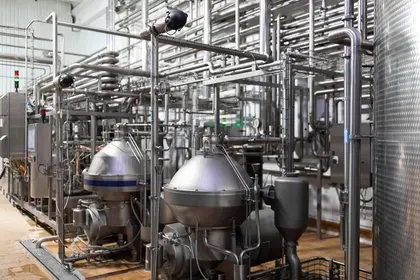
Industrial furnaces, boilers, vehicle exhaust systems, and combustion equipment all generate large amounts of medium-temperature waste heat, typically in the range of 300–400°C.
The mainstream material used in existing thermoelectric modules is Bi₂Te₃-based material. It performs well in low-temperature applications, but its long-term reliability and performance begin to decline around 300°C and above. As a result, commercial deployment has remained limited when efficiency and return on investment are taken into account.
High-temperature waste heat is already being recovered in large-scale systems such as boilers and heat recovery equipment. By contrast, medium-temperature waste heat is often scattered across many parts of a facility and is left unused because recovery is not always economically viable.
This is especially true for heat generated in pipes, equipment surfaces, and exhaust lines. The amount from each individual source may be small, and in many cases conventional power-generation equipment such as steam turbines is not practical because of cost and space constraints.
Yet when viewed across an entire site, these smaller heat sources can add up to a meaningful amount of energy. If they can be recovered efficiently, the result could be a major step forward in energy utilization.
In other words, there is still a gap between where heat exists and where suitable materials can make use of it.
As the importance of carbon neutrality and energy efficiency continues to grow, interest is rising in new materials that can operate stably in this medium-temperature range.
One material now attracting attention is Mg₂Sn (magnesium stannide).
Made from magnesium and tin, Mg₂Sn is drawing interest because it may offer the two key properties required for thermoelectric materials: high electrical conductivity and low thermal conductivity. In particular, it shows promise in the 300–400°C medium-temperature range.
Thermoelectric modules are built by combining p-type and n-type semiconductors, and their performance depends heavily on how well those two sides are balanced. For practical use, it is essential to match properties such as electrical resistivity and thermal conductivity across both p-type and n-type elements. Mg₂Sn has been reported as having potential for performance improvement in both types, which makes it a promising candidate for solving one of thermoelectric power generation’s core challenges: matching the properties of p-type and n-type legs.
Mg₂Sn also has another advantage. Its constituent elements are relatively abundant in the Earth’s crust — roughly 10 to 100 times more abundant than those used in Bi₂Te₃-based materials. In addition, because it does not rely on highly toxic elements such as lead, it is considered a potentially more sustainable material with future cost advantages.
Possible applications include waste heat recovery from metal-processing furnaces and ceramic kilns, as well as electricity generation from smaller medium-temperature heat sources distributed throughout industrial facilities.
This kind of distributed heat has traditionally been difficult to recover from an economic standpoint. Thermoelectric power generation could therefore become a new and practical option.
| Temperature Range |
Main Material | Technical Position | Practical / Business Characteristics |
|---|---|---|---|
| Low temperature (~200°C) |
Bi2Te3-based materials | Commercially mature | Widely used in Peltier cooling and other applications. Proven in mass production and stable in performance, but not suitable for high-temperature use. |
| Medium temperature (300–600°C) |
PbTe | Traditional mainstream material | Strong performance in waste heat power generation and a deep research base. However, environmental regulations related to lead and tellurium resource constraints are challenges. |
| Medium temperature (300–400°C) |
Mg2Sn | Next-generation leading candidate | Composed of relatively abundant elements and attractive from both resource and cost perspectives. Research on high-quality crystal growth and defect control is advancing, with potential for both n-type and p-type performance. Expected to have strong mass-production potential. |
| High temperature (700°C and above) |
SiGe | High-temperature stable material | Proven in space applications and valued for heat resistance and reliability, but expensive. |
Research and development efforts are also advancing in this area. A research group led by Associate Professor Hayashi of the Graduate School of Engineering, Tohoku University, in collaboration with Tsinghua University in China, has successfully controlled vacancy defects in Mg₂Sn single crystals and reported the possibility of achieving both high electrical conductivity and low thermal conductivity. The group also reported promising thermoelectric performance in both n-type and p-type materials.
In short, their work suggests that by growing high-quality Mg₂Sn single crystals and intentionally controlling vacancy defects — the “missing atoms” within the crystal lattice — it may be possible to achieve the properties required for thermoelectric materials.
The research group led by Associate Professor Hayashi and Sumitomo Metal Mining have been working on this material since 2019 under the Tohoku University–Sumitomo Metal Mining Vision Co-Creation Partnership. In addition, Sumitomo Metal Mining is also advancing work on crystal growth, scale-up, and device modeling.
Today, waste heat recovery systems using Bi₂Te₃-based modules are already helping improve energy use in large-scale heat sources through steam recovery equipment and other systems. However, the use of small waste heat sources distributed throughout equipment remains a challenge. Because thermoelectric modules can be compact and deployed in a distributed way, they are increasingly being recognized as a promising solution for recovering this otherwise unused heat.
Demonstration testing is already under way for systems that recover heat from high-temperature gas and generate electricity, industrial waste heat recovery units that produce kilowatt-class power from localized heat sources within a plant, flexible thermoelectric modules that can be attached directly to piping, and thermoelectric wireless devices. Mg₂Sn materials may also find use in these applications in the future.
To achieve practical implementation, research and development must go beyond material performance alone. It also needs to address the durability of surrounding materials such as electrodes, resins, and adhesives, along with joining technology, circuit design, and optimization for installation conditions. In other words, system-level optimization is just as important as material development.
Thermoelectric devices do more than generate electricity from temperature differences. They can also produce a cooling effect when an electric current is applied. That opens up possibilities for thermal management in electronic devices and batteries.
Looking ahead, thermoelectric technology may develop in several directions:
1. Recovering electricity from small-scale waste heat for use in IoT sensors and similar devices
2. Recovering larger amounts of power as industrial waste heat recovery units
3. Combining thermoelectric modules with flexible designs to capture heat efficiently from curved pipes and other surfaces
4. Advancing integrated implementation that includes circuit design and application design
Thermoelectric power generation is not a universal solution. But when applied in the right place, it can improve equipment efficiency and support more advanced quality control.
In particular, for IoT applications, it can provide power in locations where electricity is difficult to supply, or in high-temperature and hazardous environments where battery replacement is impractical. That makes self-powered sensing more feasible and can improve both the quantity and quality of data collected — accelerating the sophistication of manufacturing operations and infrastructure management.
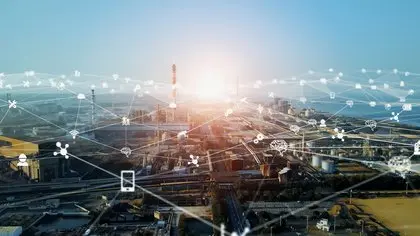
If heat, long overlooked as an energy resource, begins to function as a distributed power source, it may change the way we use energy itself. Reusing heat generated in everyday places could also help build a more sustainable social infrastructure.
As these invisible power-generating technologies accumulate, our future may become smarter and more sustainable. Thermoelectric power generation could be one of the important pieces driving that change.
For related columns and related information on materials and implementation, please take a look as well. If you are considering a topic for discussion, please feel free to contact us through the X-MINING inquiry form.
Written by: X-MINING Editorial Team
Ready to get started? Contact us to talk about your requirements.
Article

Article

Article

Article
Introducing Sumitomo Metal Mining’s material products,
which are the starting point for X-MINING innovation.