Oxidation-Resistant Nano Copper Powders


閉じる
閉じる
Search
As electronic devices such as smartphones, vehicles, and home appliances become more advanced, manufacturing technologies must also evolve. One key trend is low-temperature assembly, where components are joined at lower process temperatures. A core technology enabling this is sintering—a process that bonds powder materials using heat. Because sintering can join and shape materials without fully melting them, it can reduce energy use and material waste while improving part performance and reliability.
With carbon neutrality and resource constraints becoming major business priorities, interest in sintering is growing as a practical way to improve manufacturing efficiency and resource productivity. Since it can help simplify processes, reduce weight, and improve durability, many industries are re-evaluating sintering as a strategic manufacturing technology.
Sintering is used across a wide range of fields—from parts manufacturing to electronic materials and energy-related applications. It is an “invisible” enabling technology that supports a more sustainable society. This article explains the benefits of sintering and where it is headed next.
Sintering is widely used in electronics and electrical applications, including conductive layers, thermal interface layers, and chip-attach joints. It is also used for porous materials such as filters, and for powder-metallurgy parts such as automotive gears. In many products—from smartphones to automotive electronics and industrial equipment—sintering is a key enabling technology.
Sintering is not limited to cutting-edge applications. It is also a basic, reliable process for manufacturing functional parts from powders at scale. A major advantage is that engineers can design material properties and the manufacturing process together, which is valuable in mass-production development.
In many sintering processes, high-temperature processing (often above 1,000°C) has been required, which has limited applications due to heat constraints on nearby components and substrates. In contrast, low-temperature sintering is gaining attention because lowering the process temperature can expand applications while keeping the advantages of sintering.
As companies address device electrification, higher functionality, resource constraints, and lower environmental impact, more teams are reviewing manufacturing processes themselves. In that context, low-temperature sintering is being re-recognized as a manufacturing technology that helps optimize function, resource efficiency, and mass producibility at the same time.
A key feature of sintering is that it can deliver functional performance by bonding powders without fully melting the material. This helps retain key metal properties—such as electrical and thermal conductivity—while enabling flexible processes such as printing and forming.
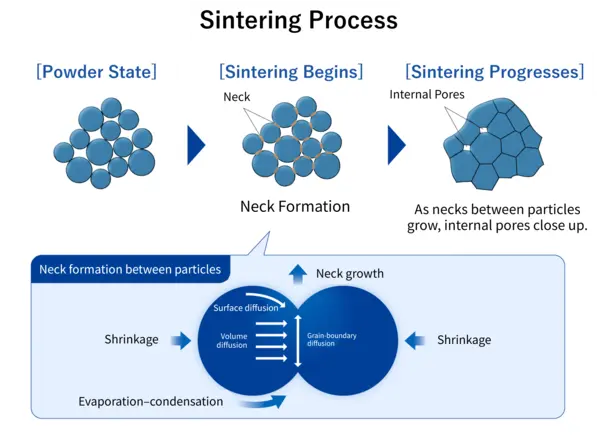
In conventional manufacturing centered on machining and welding, designers often face constraints in geometry and material placement, making it difficult to achieve both higher performance and high-volume production. Designing with sintering in mind can increase structural freedom and make it easier to integrate functions, reduce weight, and reduce part count.

Low-temperature sintering may also reduce environmental impact by shortening processes, lowering electricity use, and reducing water usage. In particular, lowering process temperature can deliver meaningful energy savings and support carbon-neutral initiatives—potentially improving yield and reducing total cost as well.
Sintering performance and applicable use cases depend heavily on the properties of the powder material. One promising material is oxidation-resistant nano copper powder, developed by Sumitomo Metal Mining.
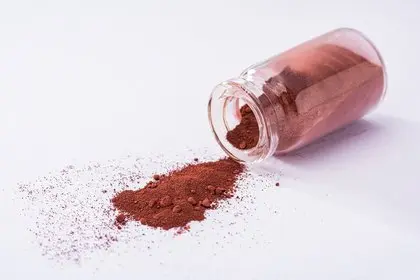
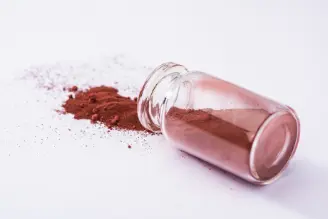
Copper offers excellent electrical and thermal conductivity, but it oxidizes easily, and oxidation tends to accelerate as particle size decreases. Oxidation-resistant nano copper powder helps mitigate this issue by protecting the surface of fine copper particles, making it more practical for low-temperature sintering.
The combination of sintering and oxidation-resistant nano copper powder offers four major benefits:
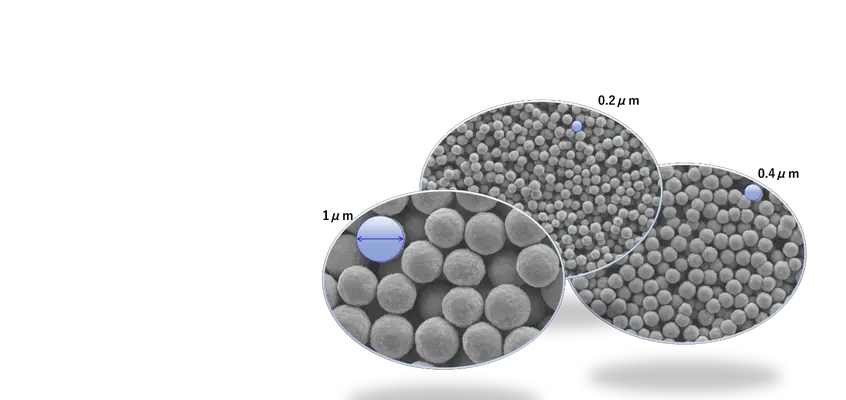
Nano-sized copper powders can sinter at relatively low temperatures. Smaller particles have larger surface area, which promotes bonding. If sintering can be done below 220°C, it may become feasible to use substrates such as resins and films that were previously difficult due to heat exposure. This is not only about “lower temperature”—it directly increases design flexibility in applications where substrate heat resistance is a key constraint.
After sintering, the particles can form a more continuous structure, making it easier to achieve higher electrical conductivity, thermal conductivity, and heat resistance. Materials that are easy to process at low temperature are often seen as weaker in high-temperature reliability, but this approach aims to balance low-temperature processing with metal-like performance after bonding.
Silver has long been a strong option for conductive materials, and fine silver powders can also enable low-temperature sintering. However, rising silver prices have become a procurement and design concern as industrial demand expands. Copper offers the next-best conductivity after silver, is generally more cost-effective, and is easier to source. If oxidation is controlled, oxidation-resistant nano copper powder becomes a realistic option for re-optimizing performance, cost, and supply stability—rather than being only a simple “silver replacement.”
Because copper has a high melting point, many copper-based processes have historically been designed for high temperatures, leading to higher equipment load, higher energy consumption, and restrictions on substrate selection. Oxidation-resistant nano copper powder may allow engineers to keep copper’s functionality while redesigning processes at lower temperatures. This can shorten processes and reduce power consumption. Lower thermal history may also reduce damage to surrounding materials and improve yield.
From a joining-material perspective, comparison with solder is also important. As devices move toward higher output (for example, with next-generation semiconductors), thermal load on joints increases. Solder can soften or melt within certain temperature ranges, which can limit reliability in high-temperature environments. Sintered metal joints can more easily combine heat resistance with heat dissipation, making them promising for high-heat devices.
In short, oxidation-resistant nano copper powder for low-temperature sintering can help unify requirements that are often treated separately: low-temperature processing, high heat resistance and thermal performance after assembly, and cost/supply risk optimization.
Today, low-temperature assembly and higher device performance must be achieved at the same time, making it difficult to separate material selection from process design. A “design for sintering” approach can provide a new way to optimize process temperature, reliability, and cost across the system.
Oxidation-resistant nano copper powder can further expand these options. Integrating material technology with manufacturing processes can influence not only product performance, but also development speed and mass-production strategy. The “sintering + oxidation-resistant nano copper powder” approach is expected to become increasingly important for the mass production of next-generation devices—especially in high-performance areas such as high heat-flux electronics and data-center-related equipment.

If you are facing challenges in achieving both low-temperature processing and high heat resistance, optimizing electrical/thermal design, or improving mass productivity and cost, please contact X-MINING. We also provide related columns and technical information on materials and electronics packaging. For ongoing topics, feel free to reach out via the X-MINING inquiry form. [Contact us]
Related Links
Written by: X-MINING Editorial Team
X-Mining combines profound expertise in materials science with industry insights to innovate and solve challenges. If you see potential for collaboration, please contact us with any questions.
Introducing Sumitomo Metal Mining’s material products,
which are the starting point for X-MINING innovation.