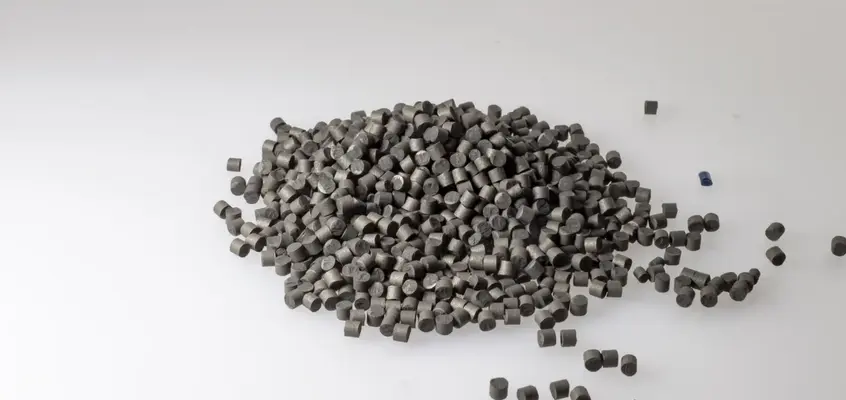
Fe-Ga Alloy Single Crystal 【R&D】


閉じる
閉じる
Search
Generative AI has spread from business operations to creative fields by learning and generating digital information, including text and images. AI is now advancing still further to encompass “physical AI,” which incorporates information concerning the real world, such as temperature, vibration, light, and chemical components, and links the information to decision-making and actions. This type of AI is expected to find applications in robotics, equipment operations, mobility, healthcare, and other fields. The widespread adoption of physical AI will depend on more than just the sophistication of the AI models. For AI to function effectively on site, the input data must be both accurate and stable. The performance of the sensors that serve as the entry points for such data depends significantly on material selection and implementation design, including substrates and packaging.
This article gives an overview of the basics of physical AI and explains the importance of the sensors that support AI’s “five senses” as well as the reasons why materials and implementation technologies represent potential sources of competitive advantage.
“Physical AI” refers to AI that acquires information from the physical world via sensors and other devices, uses this to recognize and estimate conditions, performs planning and decision-making, and then acts on the real world by controlling robots and machinery. One characteristic is that physical AI integrates generative AI and other AI technologies into a feedback loop linking perception, planning, and control to translate them into real-world operations.
For example, in robotic applications, physical AI may use a camera to capture its surroundings and measure distances, then autonomously navigate the environment while avoiding obstacles. Plant equipment can detect signs of abnormalities based on changes in vibration or temperature and use them to recommend when to stop a production line or perform inspections. In the case of mobility applications, physical AI would be able to detect people or objects to support safe driving. Other potential applications include medical and rehabilitation support, infrastructure maintenance, and measures against disasters.
A key characteristic of physical AI lies in its ability to create value only when connected to the outside world in this way. Thus, in addition to preparing training data for AI models, it is essential to design how to handle the information required for operations and how and where to incorporate decision-making on when to stop operations. Making physical AI a practical on-site tool requires improvements in AI performance while ensuring an accurate grasp of on-site conditions from an engineering perspective.
Examples of Physical AI Services
| Service | Overview |
| Autonomous driving systems | These systems use sensors to recognize a vehicle’s surroundings and AI to automate driving decisions and operations. By leveraging highly accurate integrated sensing, real-time inference, and physical-world predictive capabilities, they would enable consistent driving decisions even in complex environments. They are expected to help reduce traffic accidents, ease congestion, and improve transportation efficiency. |
| Patrol security robots | These robots autonomously detect and report abnormalities within facilities by using AI to perform video analysis and behavior recognition based on information obtained from cameras and sensors. They are expected to reduce the workload of security personnel, address labor shortages, and improve the quality of security operations. |
| Cleaning robots | These floor-cleaning robots for companies use multiple sensors, such as LiDAR (Light Detection and Ranging) and 3D cameras, to recognize their environment and to make autonomous decisions related to cleaning route optimization, operational recommendations, and situational learning. They are expected to improve cleaning efficiency and reduce costs. |
| Autonomous robotic arms | These robots autonomously adapt and make their own decisions and plans based on information obtained from cameras and sensors for operations across a wide range of fields, including the manufacturing industry. They are expected to improve efficiency and reduce labor requirements in high-mix, variable-volume production and in tasks performed under uncertain conditions, where automation has traditionally been difficult. |
Source: “Key Issues for Updating the AI Guidelines for Business” (Secretariat of the AI Governance Study Group, Ministry of Internal Affairs and Communications, December 2, 2025)
The growing interest in physical AI stems from the challenges faced by on-site operations. Issues such as labor shortages, the decline in skilled workers, stricter safety standards, and aging equipment and infrastructure have led to increasingly diverse demands. In addition, miniaturization and the declining cost of cameras and LiDAR sensors, improvements in edge computing capabilities, and advances in wireless technologies have further raised expectations for real-world implementation.
Physical AI operates under harsher conditions than AI in digital environments. In addition to environmental factors such as heat, vibration, dirt, water exposure, unstable power supplies, and unreliable wireless signals, conditions can vary from site to site even for the same system. If the input of external information is unstable, even advanced AI models will fail to deliver the expected performance. This makes the sensors that serve as the entry points for information critically important.
Generative AI capable of multimodal processing (AI that can handle multiple types of data such as text, images, and audio in an integrated manner) has functions comparable in limited ways to human eyes and ears. In contrast, for physical AI to observe the real world, it requires advanced sensor technologies that correspond to the five human senses.

Typical examples include technologies for optical systems like cameras and LiDAR, but these are not the only elements that would matter on site. Depending on the objective, they would combine multiple “senses”—temperature, pressure, vibration, magnetism, chemical composition, and position and orientation—by integrating various sensors to estimate conditions.
Sensor performance, however, is not determined by sensitivity alone. Factors such as noise resistance, long-term stability, ease of calibrating measurement drift, power consumption, and size also matter. For example, even slight day-to-day deviations in measured values can make it difficult to set alert thresholds, potentially increasing false alarms, even with AI. For the implementation of physical AI, the fundamental requirement of maintaining consistent measurement performance over the long term will significantly affect final outcomes.
It is also necessary to assume that the types and number of sensors installed in devices will increase in the future. Improving the resolution on site will require operating large numbers of sensors in a stable manner, which in turn will increase the importance of implementation design, including substrates and packaging. In other words, how competitive physical AI proves to be will depend not just on the sophistication of AI models, but on whether AI’s five senses can be configured in a form suitable for mass production.
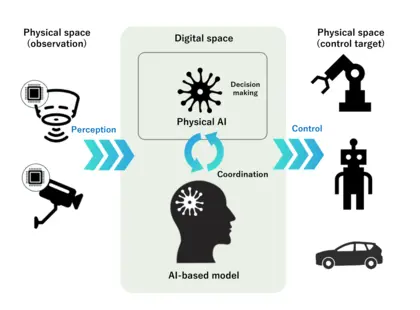
Sensor performance is determined not just by circuit design or algorithms, and is also significantly influenced by the selection of appropriate device materials as well as the combination of implementation technologies and expertise. For example, in mechanisms that convert mechanical vibration into electrical signals, the fundamentals lie in how the material deforms and how consistently that deformation can be converted into a signal.
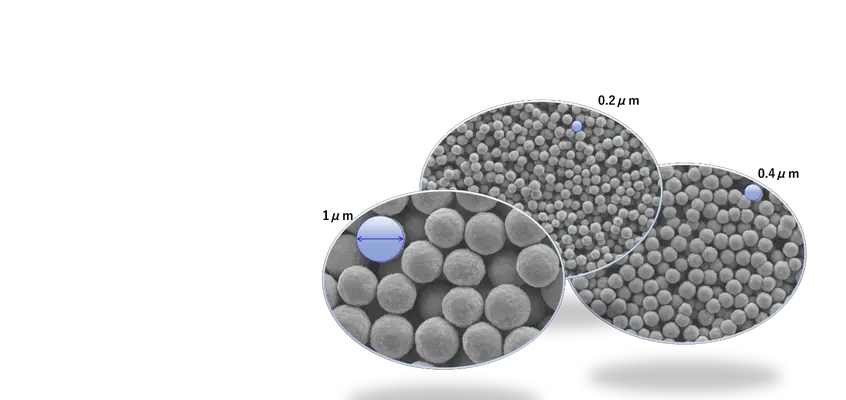
One example is the iron-gallium magnetostrictive alloy single crystals manufactured by Sumitomo Metal Mining. This material, which converts minute vibrations into electricity via the magnetostrictive effect, is currently being considered for real-world implementation as a vibration power generation device capable of detecting risks in aging infrastructure and plant equipment.
From the perspective of implementation technology, wiring design, noise and thermal countermeasures, protective coatings, package sealing, and other conditions for implementation affect sensitivity, temperature drift, and environmental resistance and determine whether the device can be used on site. The importance of these factors is expected to grow as physical AI development advances. On-site conditions are rarely ideal—they are often subject to vibration, temperature fluctuations, and electromagnetic noise.
For this reason, it is critical to provide greater design flexibility for the sensors used in physical AI and edge devices through innovations in materials and implementation. Physical AI may eventually find its way into wearable devices attached to eyeglasses or clothing. In such cases, ensuring the durability of the wiring on flexible substrates will emerge as a key issue.
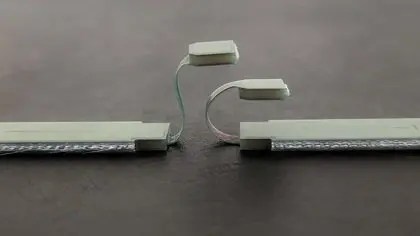
The semi-flex PCBs developed by Shinko, a Sumitomo Metal Mining Group company, are an example of an implementation technology for forming circuits and wiring using flexible materials. Since the selected conductive materials and formation conditions affect resistance variation and durability, devices for physical AI must be designed while taking into account such implementation technologies.
X-MINING is intended to serve as an information-gathering and evaluation platform for introducing materials and technologies that could be useful in comparative studies of materials selection and implementation, linking to the next stage of co-creation.
Physical AI will move from discussions of feasibility to practical choices regarding the conditions and costs required for viability. For manufacturing in the age of physical AI, it will therefore be important to deepen discussions related to the fields that will support AI’s five senses.
Related articles and information on relevant technologies, including materials and implementation, are also available. If you have a subject area you are currently considering, please feel free to contact us via the X-MINING “Contact Us” form.
Contact us
【Related pages】
Ready to get started? Contact us to talk about your requirements.
Introducing Sumitomo Metal Mining’s material products,
which are the starting point for X-MINING innovation.