Article

閉じる
閉じる
Search
SmFeN Magnetic Materials offer the following features:

Increased Packing Density
Particle size 1/50 of conventional reduces material costs

Wear Prevention and Cost Reduction
Achieved with µ-sized fine powders

Enhanced Magnetism, Fewer Steps
SmFeN and ferrite injection molding simplifies production

Neodymium-Free
Reduces inventory risks from price changes
Note: These insights are based on comparisons between our SmFeN products and neodymium (Nd) products. For details, please contact us.
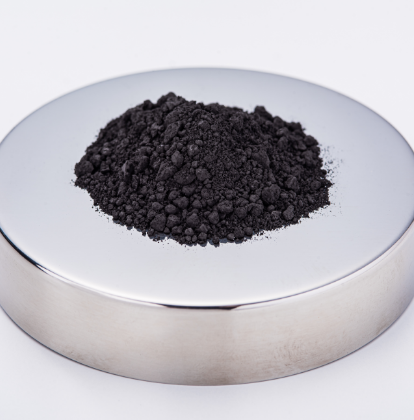
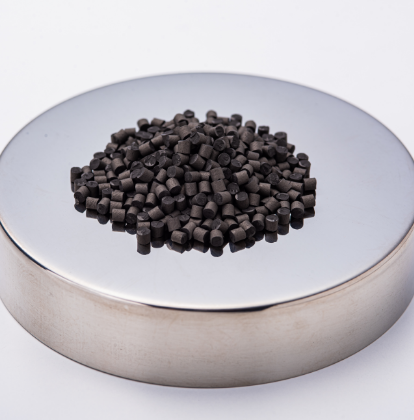
Sumitomo Metal Mining has manufactured samarium-iron-nitrogen (SmFeN) magnetic materials for more than 20 years. These materials are made with samarium (Sm), a surplus element among the 17 rare-earth elements, so raw-material supply risk stays low.
They deliver magnetic properties comparable to those of neodymium-iron-boron (NdFeB) magnetic materials, but with more stable pricing.
The properties of anisotropic magnet materials vary with factors such as magnetic circuit design and molding conditions, which can make them seem difficult to use. We support successful product development with services such as magnetic field analysis simulations and molding advice.
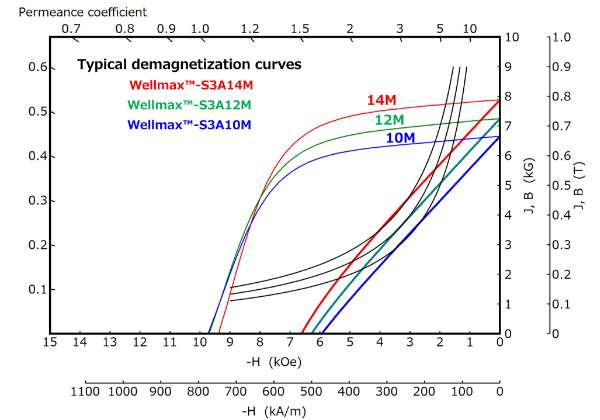
This graph shows typical demagnetization curves comparing the magnetic properties of Wellmax™-series products.
If our standard lineup does not meet your requirements, please contact us for custom solutions.
| Product name | Magnetic Powder | Binder | Max. Magnetic Energy Product (kJ/m3(MGOe)) Features | Characteristics |
| S1 | SmFeN
(Anisotropy) |
(Magnetic Powder) | 286~310(36~39) |
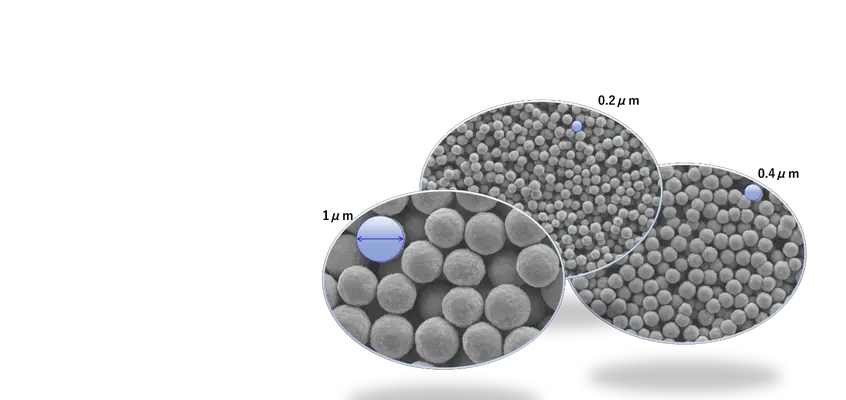
・SmFeN fine particles with average particle size of 2–3 μm
|
| S3 | PA12 | 80~111(10~14) |
|
|
| S4 | SmFeN+Ferrite
(Anisotropy) |
PA12 | 24~56(3~7) |
|
| S5P | SmFeN+NdFeB
(Anisotropy) |
PPS | 80~103(10~13) |
|
Note: Wellmax™-series Magnetic Materials include Wellmax™-S1 magnet powder and injection-molded Magnetic Materials such as Wellmax™-S3, S4, or S5. These products have a maximum magnetic energy product (BHmax) of 24–143 kJ/m³ (3–18 MGOe).
For detailed product information and specifications, download the data sheets below.
Bonded Magnetic Materials by SMM
Anisotropic SmFeN (Samarium-Iron-Nitrogen) magnet powder
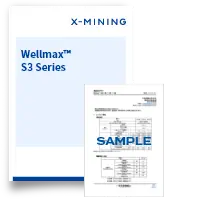
Anisotropic SmFeN (Samarium-Iron-Nitrogen) PA12 magnet pellet for injection molding
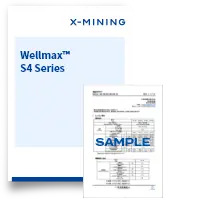
Anisotropic SmFeN (Samarium-Iron-Nitrogen) and ferrite hybrid PA12 magnet pellet for injection molding
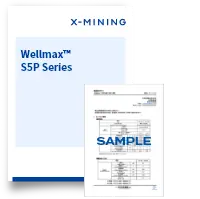
Anisotropic NdFeB and SmFeN hybrid PPS magnet pellet for injection molding
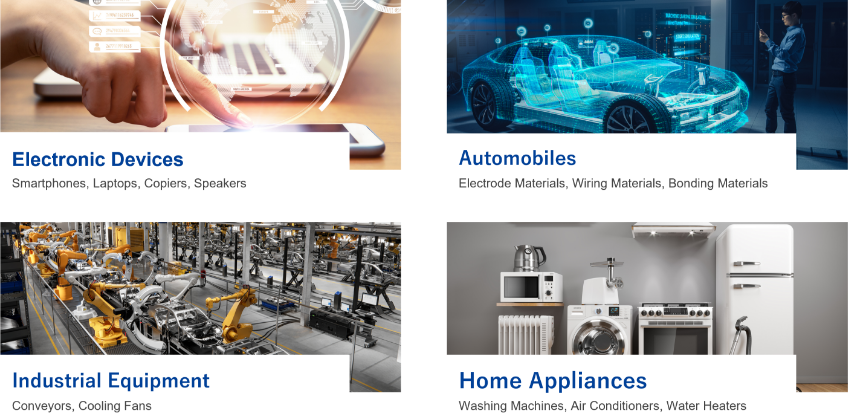
Magnets are a core component of motors. The strength of these magnets significantly affects motor output and energy efficiency. Wellmax™-series SmFeN Magnetic Materials have been used for more than 20 years in everyday electrical appliances such as air conditioners and washing machines. In recent years, the use of Wellmax™-series materials has expanded to a wider range of motor applications, including automotive motors.
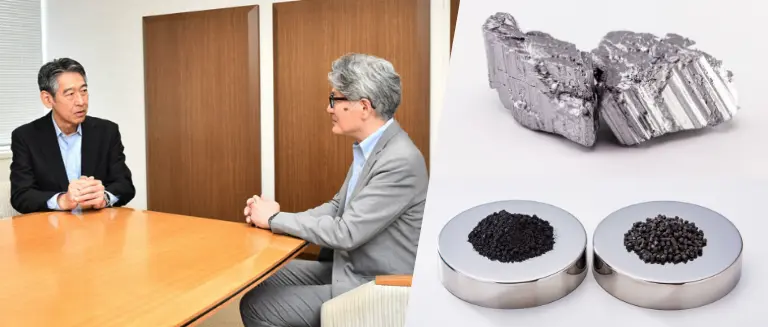
Samarium is one of the 17 rare-earth elements. Its deposits are smaller than those of neodymium (Nd) but larger than those of dysprosium (Dy). The most common material that contains Sm is samarium-cobalt (SmCo). While the demand for Nd and Dy keeps rising, the demand for Sm remains low. Because mining companies co-mine samarium with other rare-earth elements when they extract Nd and Dy, samarium remains a surplus element during that process. Therefore, using samarium contributes to the efficient use of global resources.
About the surge in the price of rare-earth magnets.
Magnetic Material Applications Such as EV Motors, and the Potential of Samarium-Iron-Nitrogen Magnetic Materials
We provide simulations for magnetic field analysis in magnet-mold design so that customers can use anisotropic magnets effectively and ensure that their products perform as required. We also advise on mold configurations to support product development. Examples of our advice include the selection of magnetic and nonMagnetic Materials, magnet-related equipment (such as molding machines and magnetizing power supplies), and molding conditions. Support for mold design through our magnetic field analysis simulations.

Support for mold design through our magnetic field analysis simulations
X-Mining combines deep materials science expertise with industry insights to innovate and solve challenges.
If you see potential for collaboration, please contact us with any questions.
Article
X-TALK
 Sumitomo Metal Mining
Magnetic Material Applications Such as EV Motors,
Sumitomo Metal Mining
Magnetic Material Applications Such as EV Motors,
X-TALK
Sumitomo Metal Mining
Surge in the Prices of Rare Earth Magnets and the Possibility of Samarium-Iron-Nitride Magnetic Materials
Case
Case

Case
Introducing Sumitomo Metal Mining’s material products,
which are the starting point for X-MINING innovation.