
for Agriculture
Revolutionizing agriculture with material technology

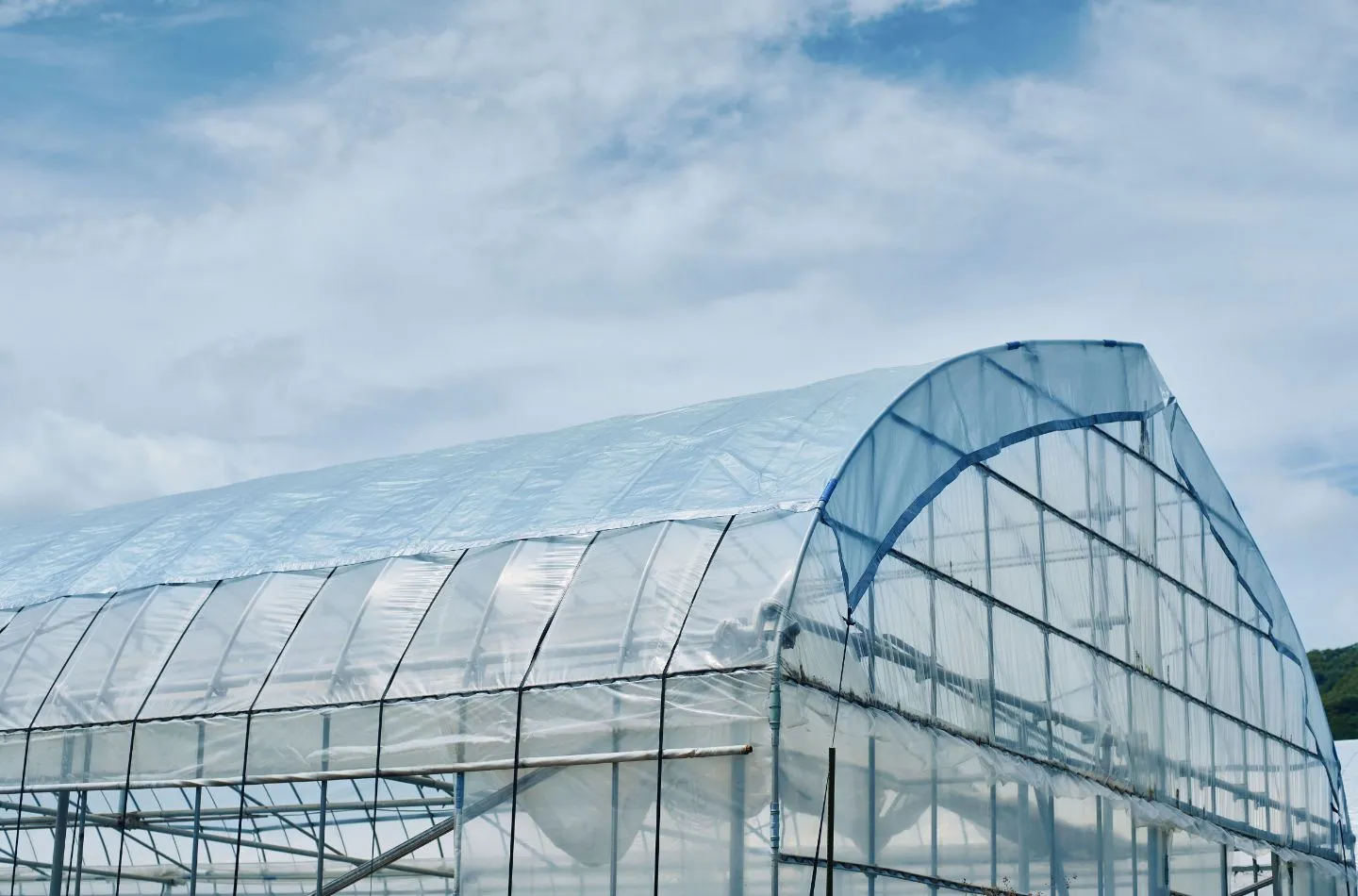

SOLAMENT™ is an advanced material
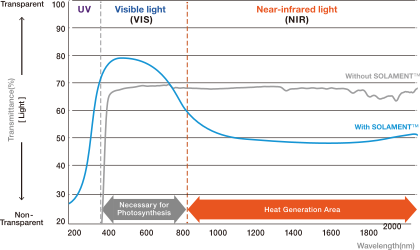
technology that absorbs near-infrared light
of sunlight and transforms it into new value.
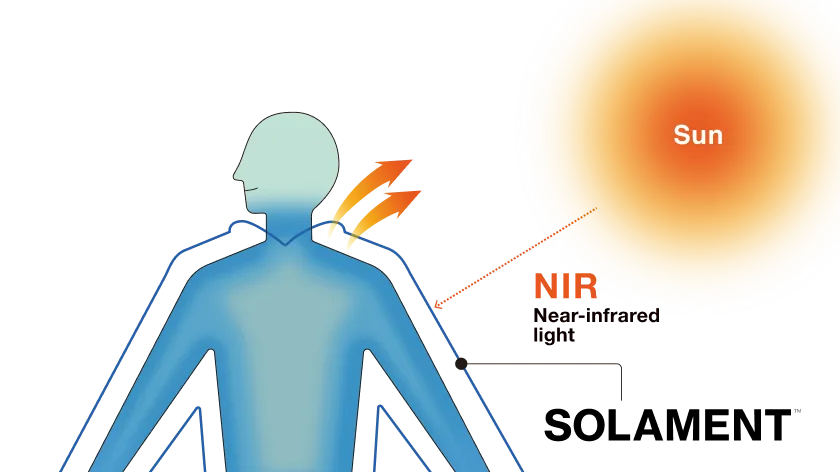
Its heat-blocking function protects people
and crops from heat.
Its heating function allows farmers to grow
crops in winter, which was previously
impossible.
With partners who are shaping the future of
agriculture in Japan and around the world,
SOLAMENT™ illuminates new possibilities in
agriculture.

Function
SOLAMENT™ for
HEAT BLOCKING
Function 01
HEAT BLOCKING
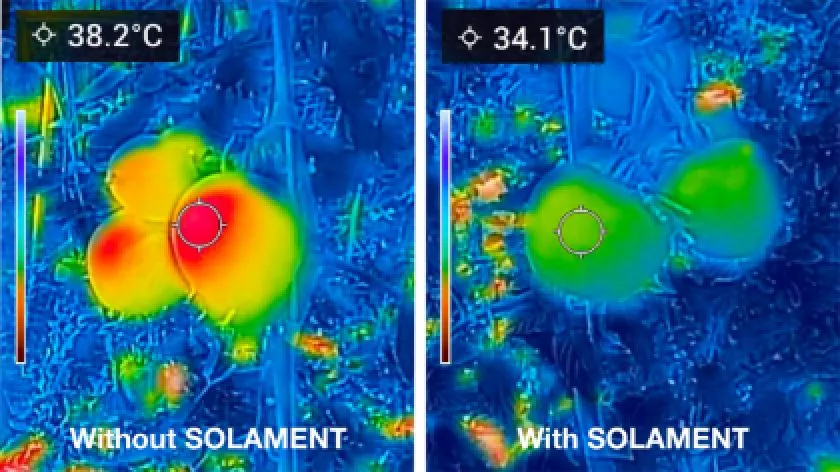
By applying SOLAMENT™'s heat-blocking function to agricultural materials, soil temperatures can be reduced by up to 8.5℃ during peak summer conditions.
At the same time, SOLAMENT™ blocks only excess heat while allowing visible light through—resulting in case studies where crop yields increased by up to 150%.*
*Based on the company's in-house research.
Protecting crops from heat stress
SOLAMENT™ helps suppress greenhouse and fruit surface temperatures, preventing leaf scorch and fruit cracking.
Improving working
conditions in extreme heat
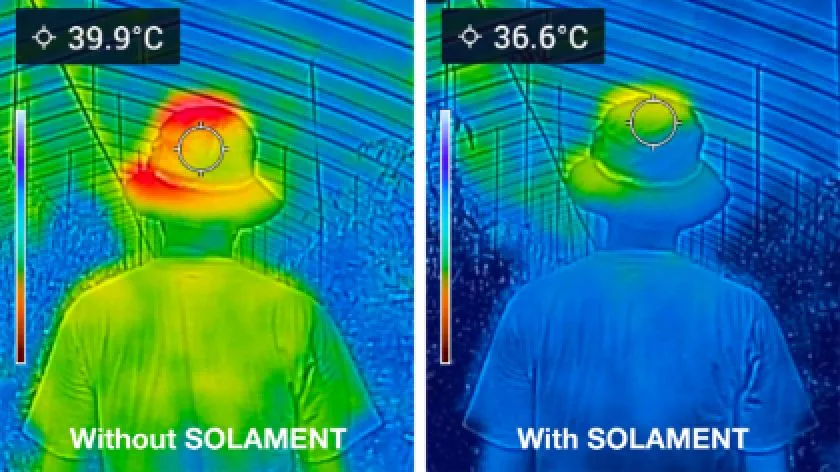
SOLAMENT™ creates a more comfortable working environment even in summer.
When applied to agricultural workwear, it also helps reduce skin discomfort and heat buildup inside clothing.
Function
SOLAMENT™ for
HEATING
Function 02
HEATING
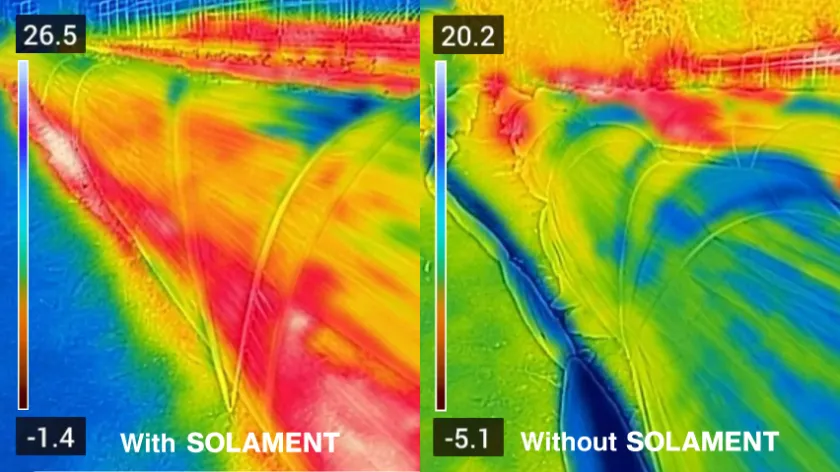
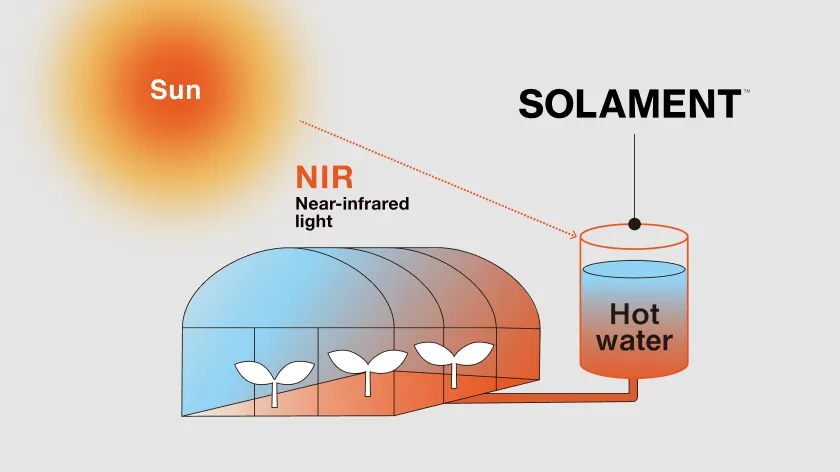
SOLAMENT™ also has the ability to convart near-infrared light into heat. This function may support winter cultivation and reduce greenhouse heating fuel use.
*The image shows sample measured values. Performance may vary depending on environmental conditions.


Shaping the future of farming
with a solar-smart material, SOLAMENT™
Shaping the future of farming
with a solar-smart material,
SOLAMENT™

ReFarm by SOLAMENT™ works closely with a wide range of partners.
Action
Vegetables that have been passed down through generations across Japan for centuries are known as heirloom vegetables.
Today, many of them are facing the risk of extinction due to the impacts of climate change.
Through heat-blocking agricultural supplies and workwear powered by SOLAMENT™,
we have launched initiatives to help preserve these heirloom vegetables.


Field trial
We have begun collaborative field trials with our partners.








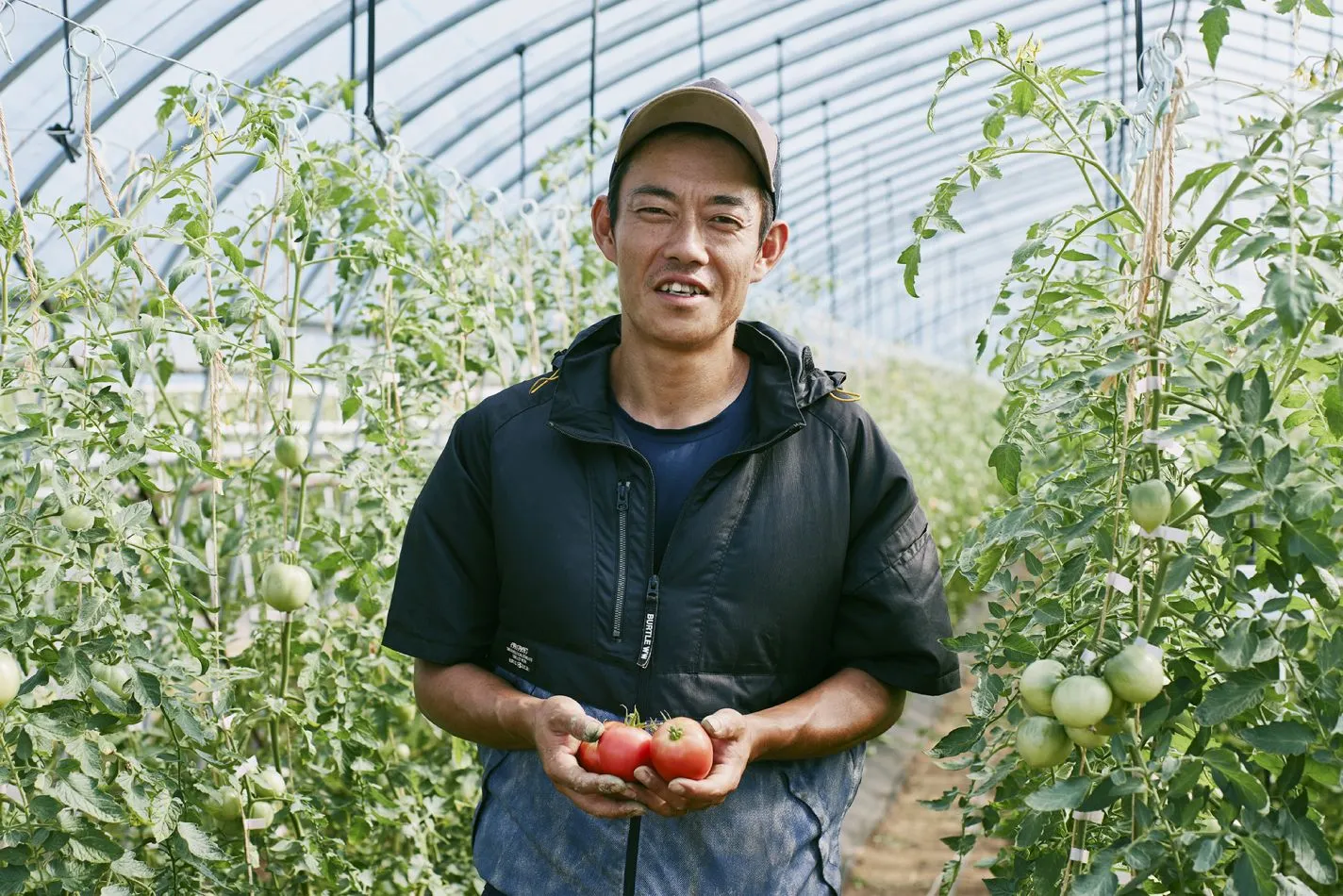
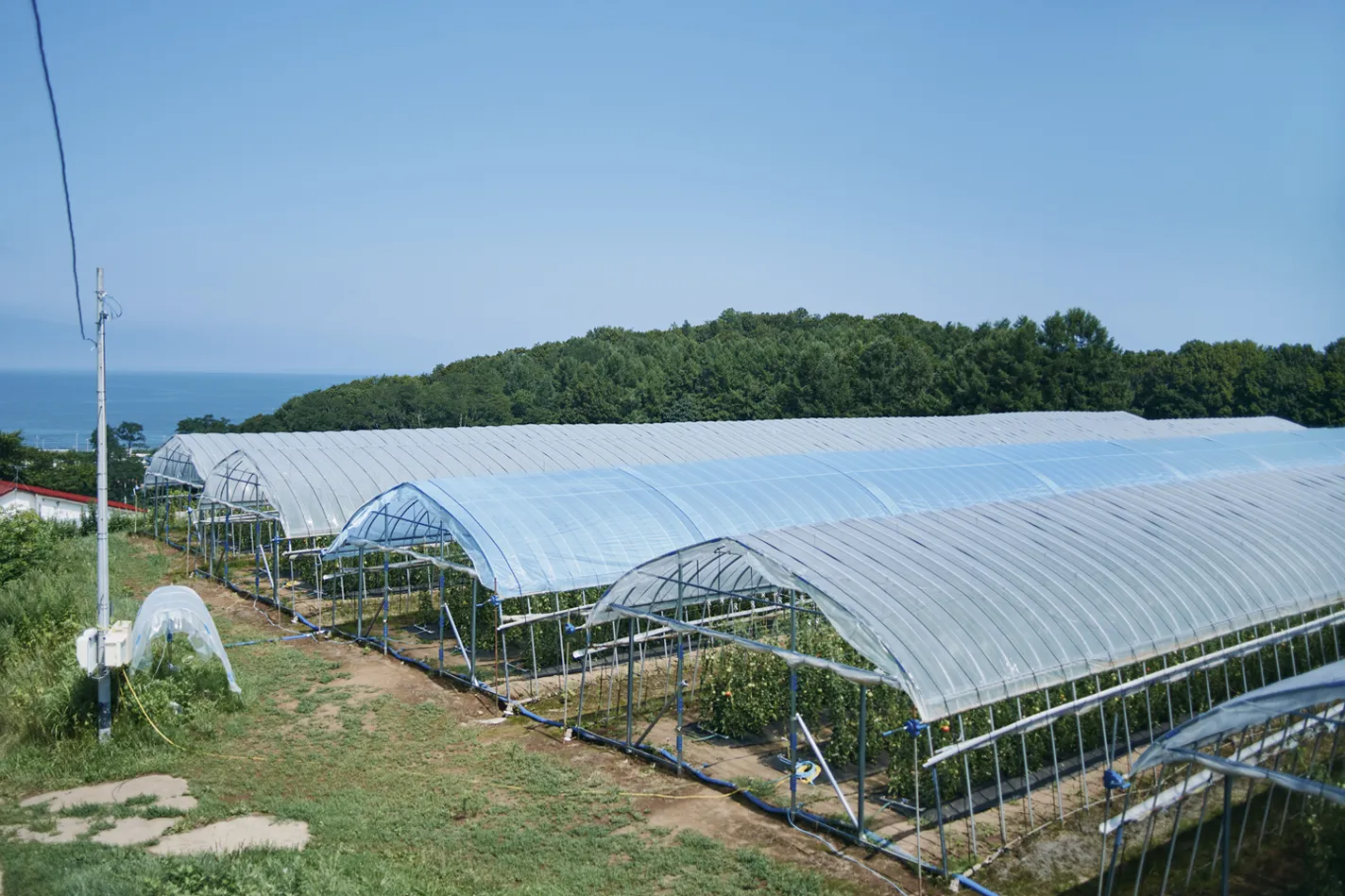
SOLAMENT™ is becoming an essential technology for agriculture in the era of global warming
Each year the heat is getting stronger, and traditional cultivation methods no longer work as they once did.
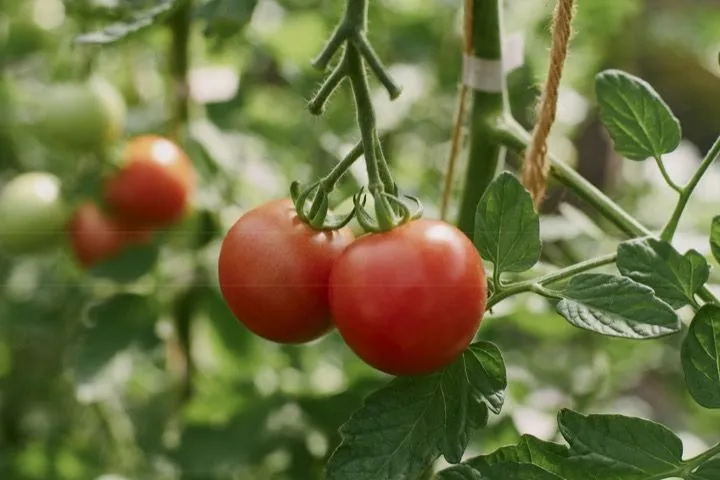
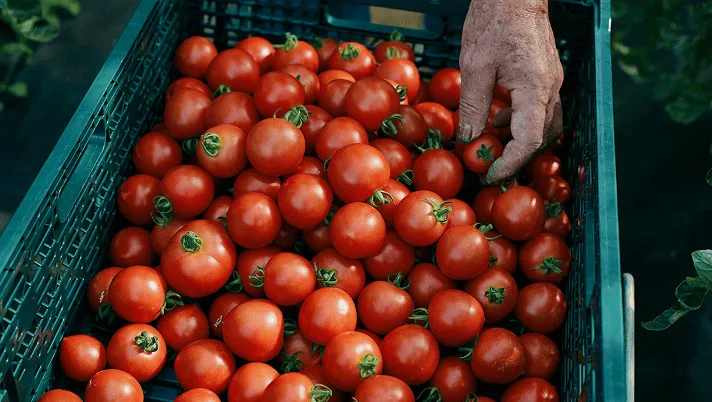
Just like people suffer from heatstroke, crops also have their limits. After much trial and error, we adopted SOLAMENT AgriCool Shade™ (advanced heat-blocking shade net). It greatly reduces the heat stress in tomatoes, allows photosynthesis to continue, and helps secure quality.
By lowering cumulative temperature with SOLAMENT™, we can delay harvests, smooth shipping peaks, and stabilize prices—benefiting both consumers and farmers. With rising temperatures, adapting crops is getting harder every year, but with technologies like SOLAMENT™, we can continue producing tastier tomatoes.
Masaru Nakano, NAKANO FARM / Hokkaido
SOLAMENT™ is becoming an essential technology for agriculture in the era of global warming
Each year the heat is getting stronger, and traditional cultivation methods no longer work as they once did.
Just like people suffer from heatstroke, crops also have their limits. After much trial and error, we adopted SOLAMENT AgriCool Shade™ (advanced heat-blocking shade net). It greatly reduces the heat stress in tomatoes, allows photosynthesis to continue, and helps secure quality.
By lowering cumulative temperature with SOLAMENT™, we can delay harvests, smooth shipping peaks, and stabilize prices—benefiting both consumers and farmers. With rising temperatures, adapting crops is getting harder every year, but with technologies like SOLAMENT™, we can continue producing tastier tomatoes.
Masaru Nakano, NAKANO FARM / Hokkaido
Co-creation examples
We have developed various products with partners.

Advanced heat-blocking shade net
Controlling light transmission
and shielding
Using advanced weaving techniques, multiple variations in the transmission of near-infrared and visible light are available.
Options can be selected to suit different crop varieties, production regions, and growing environments.
Allowing ultraviolet light
to pass through for crop growth
Because moderate levels of ultraviolet light are necessary for crop coloration—such as in eggplants—as well as for pollinator activity, transmission levels are carefully adjusted to avoid excessive blocking.
Durable performance with
long-lasting heat-blocking effects
As SOLAMENT™ is derived from rare-metal–based metallic particles, it is highly resistant to ultraviolet degradation.
This durability allows its heat-blocking performance to remain effective over extended periods.



Potential use case 01

Agricultural workwear
HOPE WEAR for Farm
This innovative agricultural workwear is designed for the era of global boiling By incorporating SOLAMENT™ into the fabric, it delivers a heat-blocking effect for extra comfort during farm work in summer Not only for agriculture, but for anyone working under the sun.
*This is a concept model and is not scheduled for release.
Structure & Function
The built-in fans draw a large volume of air into the garment, creating a spacious layer between the skin and the fabric to maximize the heat-blocking function of SOLAMENT™. While significantly blocking near-infrared light, the airflow promotes sweat evaporation, ensuring comfort during outdoor work.
Design Partner

Potential use case 02
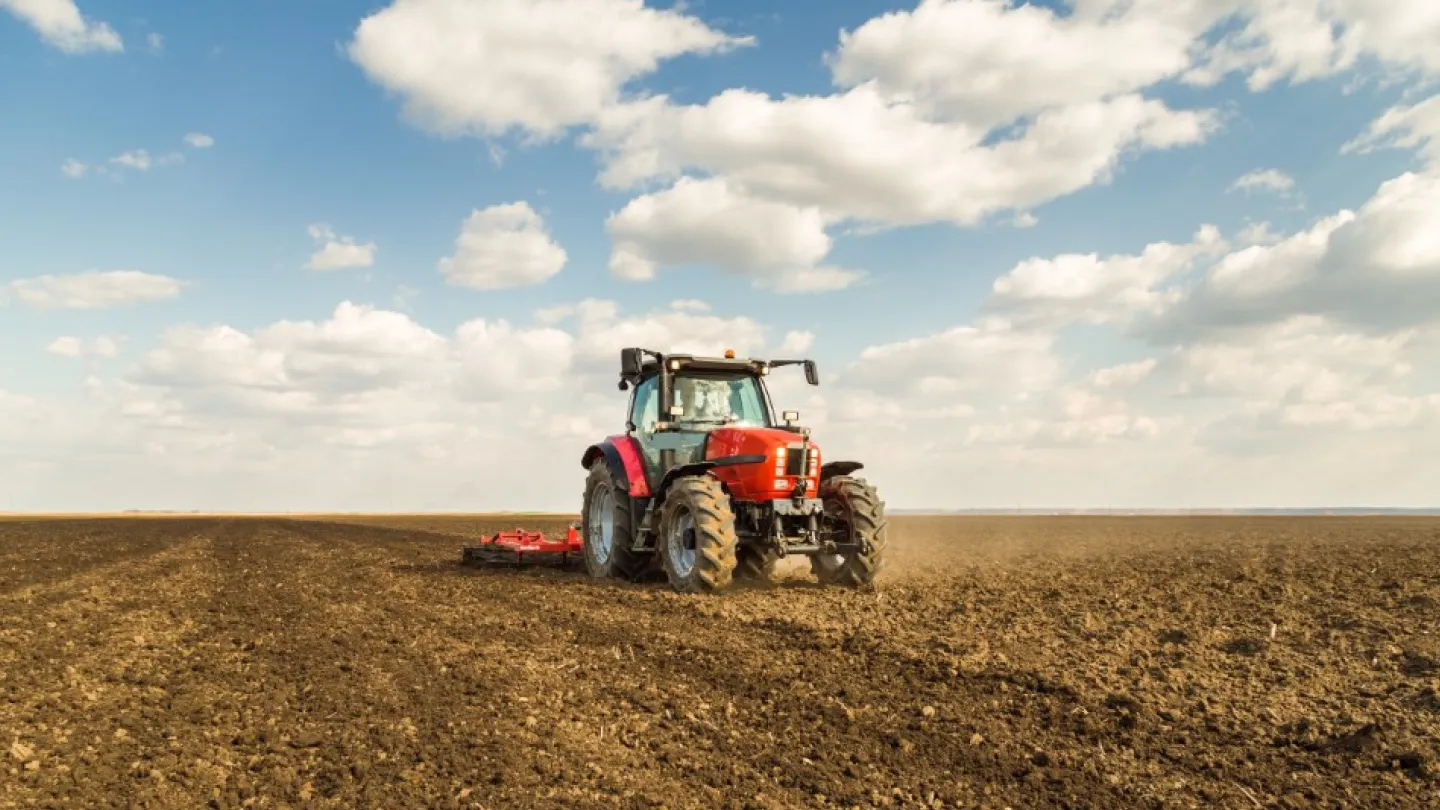
Farm tractor
Reducing cabin temperature rise
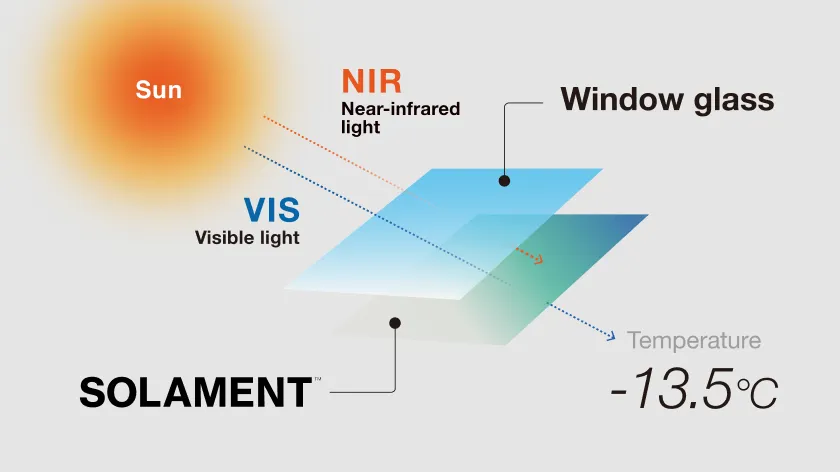
In summer, car cabins can easily heat up.
In passenger vehicles, interior temperature can reach as high as 65℃ under direct sunlight. By applying a window film that incorporates SOLAMENT™ to the glass, the cabin temperature can be reduced by up to 13.5℃. When used on tractors, it blocks the heat that causes temperature rise while maintaining brightness, creating a comfortable working environment for farm work.*
*Based on the company's in-house research.
Potential use case 03
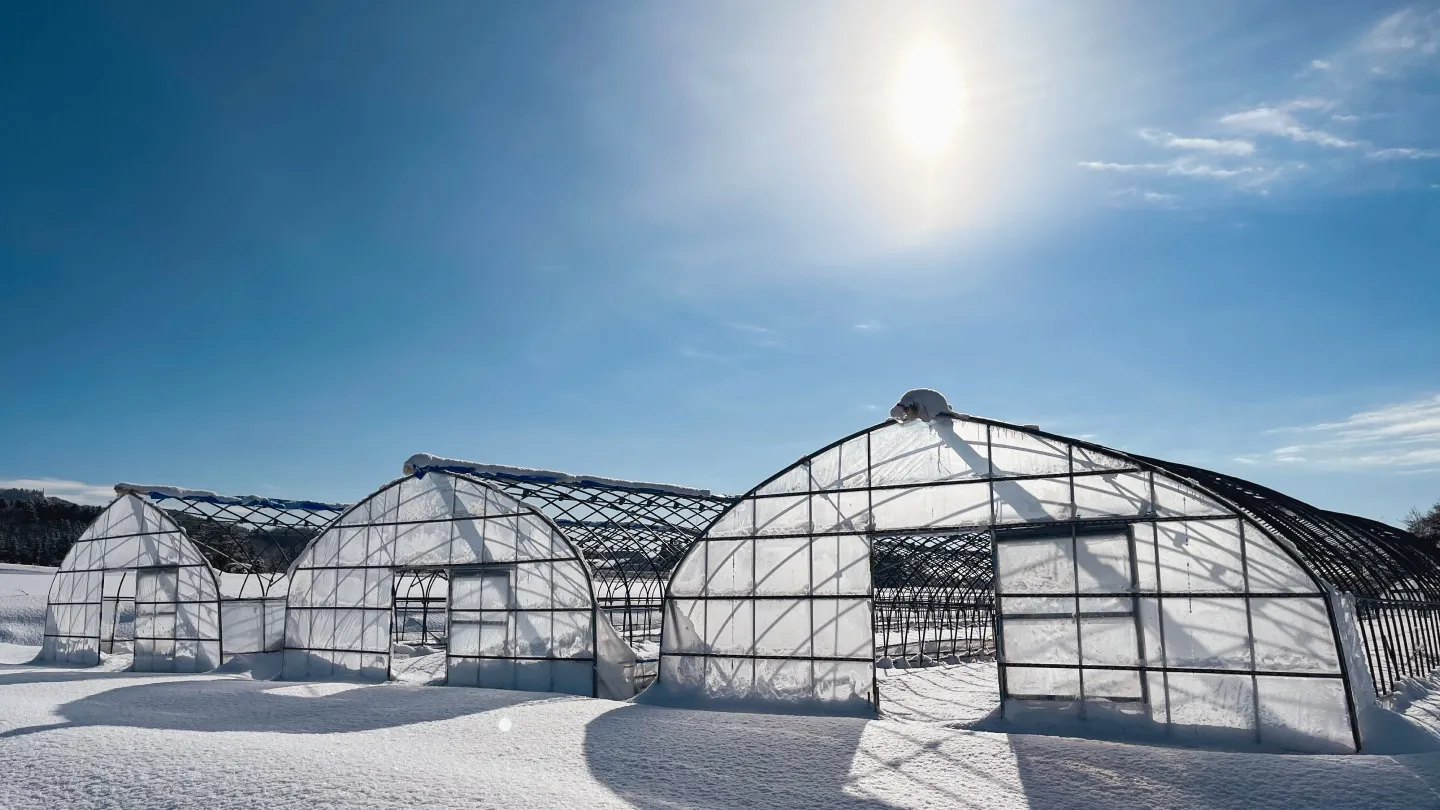
Winter greenhouse horticulture
Harnessing sunlight for heat in cold seasons
Even in cold winter, SOLAMENT™ absorbs near-infrared light and converts it into heat, helping maintain a warm environment. Looking ahead, if the heat produced by SOLAMENT™ can be stored and used to create hot water, it could offer an alternative to the heavy oil currently used for greenhouse heating. Furthermore, if this thermal energy can be converted into electricity or other usable forms of power, it may open the door to a new, more sustainable model for agricultural energy.


Illuminate your new
possibilities with us
We are seeking partners to shape the future of agriculture with SOLAMENT™. From field trial to material development, there are many ways to collaborate. Contact us if you're interested in exploring the possibilities together.

